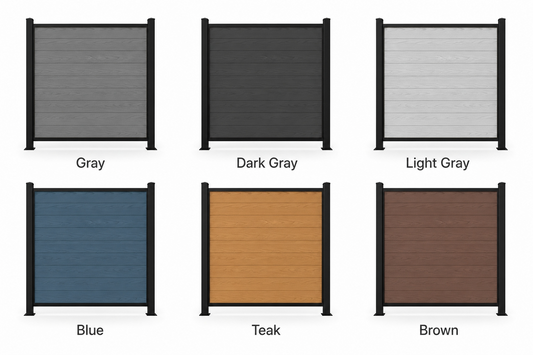
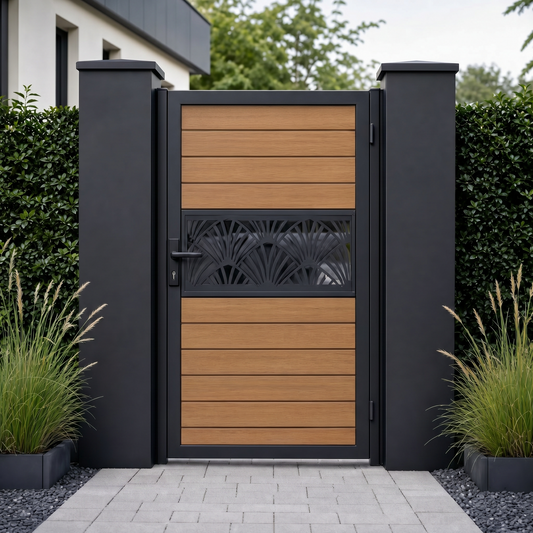
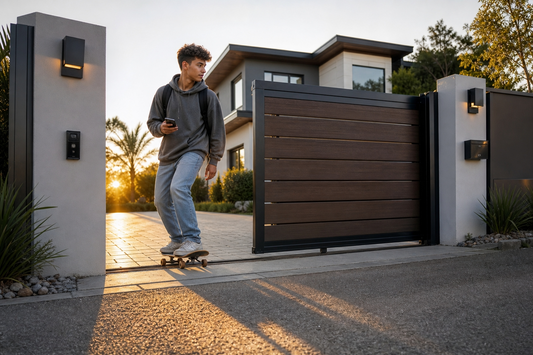
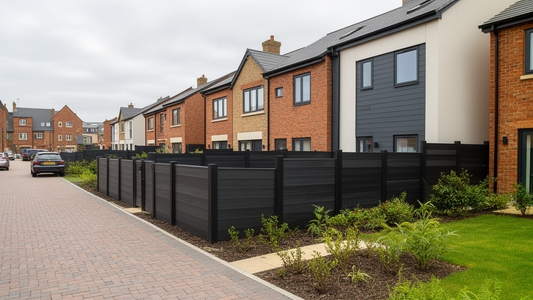
Composite Fencing Wholesale USA: How to Buy Factory-Direct from China
For dealers, lumberyards, and contractors looking to source composite fencing wholesale in the USA, the difference between buying through a domestic distributor and going factory-direct from China can translate to 40–80% lower unit costs on an equivalent product spec. That margin gap is why a growing number of regional building suppliers and fencing contractors are bypassing traditional distribution channels and dealing directly with WPC manufacturers in Guangdong and other Chinese manufacturing provinces. This guide walks through how wholesale pricing is structured, what minimum orders look like, landed-cost arithmetic, and how to build a supplier relationship that scales from trial pallet to full container program. For a broader overview of composite fencing product types and specifications, the composite fencing & gates buyer's guide is a good starting point.
How Wholesale Composite Fencing Pricing Works
Wholesale pricing for WPC composite fencing follows a tiered structure that starts at the factory gate in China and multiplies through each step of the supply chain. Understanding where you sit in that chain determines both your unit economics and the relationships you need to build.
At the factory level, hollow-profile WPC fencing boards (the most common panel design) in uncapped WPC run roughly $1.50–$3.50 per linear foot ex-factory depending on board width, wall thickness, and order volume. Co-extruded (capped) profiles — where a dense polymer shell is bonded over the wood-fiber core — run $3.00–$6.00 per linear foot and higher. Gate frames, post systems, and accessories are priced separately.
These ex-factory prices become FOB (Free on Board) prices once the manufacturer loads goods into a container at the origin port. From FOB, the buyer takes on ocean freight, destination port fees, customs duties, and delivery to their warehouse — the full landed-cost stack. The critical insight: a US distributor buying at landed cost and reselling to dealers typically applies a 40–70% markup, with dealers adding another 30–50% before reaching the end buyer. The factory gate cost of boards may represent as little as 20–30% of the installed retail price paid by a homeowner.
Volume is the primary driver of unit pricing. Most Chinese WPC factories publish three to four price tiers: sample/small order, one 20-foot container (FCL), one 40-foot container (FCL), and multi-container annual program pricing. The discount from small-order to annual program can be 25–40%, so open the conversation about annual volume commitments early.
Factory-Direct vs Buying Through a US Distributor
The choice between factory-direct sourcing and buying through a US distributor involves tradeoffs in cash flow, operational complexity, flexibility, and risk. Both models have a place depending on the buyer's scale and import experience.
A US distributor offers real advantages: domestic inventory with short lead times, net-30 or net-60 payment terms, and no exposure to import complexity. If your volume is a few panels per job and you're running a lean operation without warehouse space, the distributor model makes operational sense even at a price premium — you're paying for logistics and financing services bundled into the product price.
Factory-direct sourcing puts you in control of the supply chain. You select the manufacturer, specify the exact board profile and color, choose capping tier, and negotiate pricing directly. You take on the import process, but in exchange you pay significantly less per unit and often gain access to custom specifications not available from a distributor's catalog. The composite fencing distributor guide explores the distribution business model in detail, including how regional distributors structure territory agreements and inventory programs.
For most dealers and regional contractors who are serious about composite fencing as a product line — selling more than two or three jobs per month — factory-direct sourcing at the container level becomes economically compelling. The breakeven on the operational complexity is typically reached once annual volume exceeds 3,000–5,000 linear feet, though that threshold varies by local market pricing and margin requirements.
Typical MOQs, Lead Times and Container Sizes
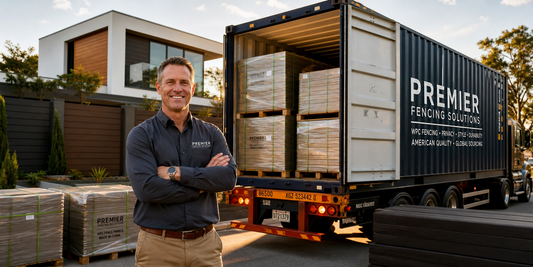
Most Chinese WPC fencing factories set their minimum order quantity (MOQ) at one full container load (FCL) for standard production runs, though many will accommodate smaller LCL (less-than-container-load) first orders to let buyers verify quality before committing to a full container.
A standard 20-foot FCL holds approximately 1,500–2,000 linear feet of composite fencing boards depending on profile dimensions and whether the cargo includes posts, hardware, and gate frames. A 40-foot FCL roughly doubles that capacity — approximately 3,000–4,000 linear feet. For a dealer or contractor, one 40-foot container can represent a full season's supply for a regional market, or a stocking position for a lumberyard serving multiple installers.
Lead times break into two phases. Production runs 2–4 weeks from order confirmation; custom profiles or new color tooling can push this to 4–6 weeks. Ocean freight from Chinese ports (Qingdao, Shanghai, Tianjin) to US West Coast ports runs approximately 14–18 days; East Coast ports add another 10–15 days via the Panama Canal. Total time from order to US warehouse arrival: 6–10 weeks. Place seasonal orders well in advance — a spring/summer stocking order placed in January or February avoids mid-season stockouts. The step-by-step import guide covers the full logistics and documentation timeline in detail.
What to Ask a Chinese WPC Fencing Factory Before Ordering

The WPC manufacturing industry in China ranges from ISO-certified world-class facilities to smaller operations with inconsistent quality control. Vetting your supplier before a wholesale order is not optional — it determines whether you end up with a profitable product line or unsellable inventory.
Start with material specifications. Ask for the exact wood fiber to polymer ratio (a legitimate WPC board is typically 55–65% recycled wood fiber, 35–45% recycled HDPE), UV stabilizer content, and whether the boards contain any PVC — some products marketed as "WPC" are actually PVC foam boards, a different product entirely. Request the material safety data sheet (MSDS).
Ask about the capping process. True co-extrusion — where the polymer shell and wood-fiber core are bonded in a single extrusion pass — produces a superior bond versus post-extrusion wrapping. Request a cross-section photo or cut sample to verify. Shell thickness matters: under 0.5mm is cosmetic; 0.8mm–1.2mm provides meaningful protection.
Request third-party test reports. Reputable exporters provide CE/REACH documentation, ISO 9001 certification, and ASTM-aligned test results. If a factory cannot produce third-party documentation, that is a red flag regardless of price. Many buyers use SGS or Bureau Veritas for a pre-shipment inspection ($300–$600) before the container is sealed — money well spent.
Landed Cost: Freight, Duties and Customs Basics
Your true landed cost — the total cost per unit delivered to your US warehouse — is the only reliable basis for setting pricing and evaluating whether factory-direct sourcing pencils out.
Landed cost = FOB price + ocean freight + origin charges + destination port fees + customs duty + inland freight.
Ocean freight for a 40-foot container from China to US West Coast ports runs approximately $3,000–$5,500 depending on market conditions; East Coast via Panama Canal adds $800–$1,500. Get current rate quotes from your freight forwarder when running calculations — rates fluctuate seasonally.
Customs duty is a critical variable. WPC fencing from China generally falls under HTS Chapter 44 (wood articles) or Chapter 39 (plastics) depending on wood/polymer ratio and how US Customs classifies the specific product. Section 301 tariffs on Chinese goods, in effect since 2018, apply to most WPC fencing products at rates of 7.5–25% on top of baseline MFN duty rates. Work with a licensed customs broker (fee: $150–$400 per entry) — the classification complexity and financial stakes make this non-negotiable for first-time importers.
Destination port fees (terminal handling, chassis) typically run $500–$900 per container. Inland delivery adds $0.05–$0.20 per linear foot depending on distance. A board costing $3.50/linear foot FOB China might have a fully landed cost of $5.50–$7.50/linear foot in a US warehouse — still well below a domestic distributor's $15–$22/linear foot wholesale price for comparable capped WPC fencing.
Building a Wholesale Relationship: Samples, Trial Orders, Scaling Up

The most durable wholesale sourcing relationships are built incrementally. Jumping straight from first contact to a 40-foot container order creates unnecessary risk on both sides. The standard progression — samples, trial order, scaling FCL program — gives you verification checkpoints at each stage.
Samples first. Any reputable WPC fencing manufacturer will send paid samples — typically a 2-foot section of each board profile, plus a post section and hardware samples. Expect to pay $50–$200 for a sample set plus shipping, often credited against your first production order. Evaluate: color uniformity, surface texture consistency, cut-end appearance (reveals capping quality), edge finish, and weight. The how to request samples page covers what to request and how to evaluate what arrives.
Trial order. After approving samples, a trial LCL shipment (2–5 pallets) or a 20-foot FCL of your best-selling profile lets you put the product in the field. Install a section, live with it for a season, and verify performance. A 20-foot container at $15,000–$25,000 landed is a reasonable trial size for a dealer with regional volume.
Scaling up. Once product quality is validated, commit to 2–4 containers per year to unlock the next price tier. Many factories will discuss regional exclusivity or private-label branding at this scale — get any exclusivity terms defined clearly in a supply agreement, including geographic region, covered product lines, minimum annual volume, and consequences for missing volume targets. The Bohai Woods wholesale program for US buyers outlines the structured programs available for dealers and distributors at various volume levels.
Frequently Asked Questions
Q: What is a typical MOQ for wholesale composite fencing from China?
A: Most established WPC composite fencing factories set their standard MOQ at one full container load (FCL) — either a 20-foot or 40-foot container. A 20-foot FCL holds approximately 1,500–2,000 linear feet of board depending on profile; a 40-foot holds roughly double. Many factories will accommodate smaller LCL trial shipments for new buyers, sometimes as few as 2–5 pallets, though per-unit pricing on LCL is meaningfully higher than FCL pricing. Discuss trial order options directly with the factory during your initial qualification conversation.
Q: How much cheaper is factory-direct composite fencing than buying from a US distributor?
A: On an apples-to-apples specification comparison, factory-direct sourcing typically delivers composite fencing boards at 40–70% less than the equivalent US distributor wholesale price. A capped WPC fencing board that a US distributor sells at $15–$22 per linear foot to a dealer might have a fully landed cost of $5.50–$9.00 per linear foot from a Chinese factory. The savings are real but must be weighed against import costs, cash flow requirements (payment before production, not on terms), and the operational effort of managing an import supply chain.
Q: What lead times should I expect for a wholesale composite fencing order?
A: Plan for 6–10 weeks total from order confirmation to product arriving at your US warehouse. Factory production runs 2–4 weeks; custom colors or profiles take longer. Ocean freight to US West Coast ports runs 14–18 days; East Coast adds 10–15 days. US customs clearance adds 1–5 business days on arrival. Build in a buffer of one to two weeks for port congestion, equipment availability, or weather delays — especially for peak spring and summer delivery windows.
Q: Do I need an import license to buy composite fencing wholesale from China?
A: No specific import license is required to import composite fencing from China into the United States — WPC composite fencing does not fall into any licensed-import category. You will need to work with a licensed US customs broker (or act as your own importer of record), correctly classify the product under the appropriate HTS code, and pay applicable customs duties including Section 301 tariffs. A customs broker handles classification and entry filing for $150–$400 per shipment, which is a necessary cost for any first-time importer.
Q: Can I start with a small trial order before committing to a full container?
A: Yes, and it is strongly recommended. Many reputable Chinese WPC fencing factories will ship a trial LCL order — typically 2–5 pallets — to let new buyers verify product quality before scaling to full FCL orders. LCL pricing per linear foot is higher than FCL pricing and ocean freight for small shipments is less efficient, but quality verification is worth the premium. Always request and evaluate paid sample sections before placing any production order — most factories offer this and credit the cost against your first order.
Ready to Get Started?
Bohai Woods works with US dealers and distributors on trial orders and full container programs — get wholesale pricing for composite fencing and gates. Visit the Bohai Woods wholesale program for US buyers to request pricing, samples, or a factory introduction.
Tags:
Previous
Composite Gate Cost USA: 2026 Price Guide (Pedestrian & Driveway)
Next
Composite Fencing Distributorship in the USA: Margins and Business Model