Composite Fencing & Gates USA: The Complete Buyer's Guide (2026)
Composite fencing has gone from a niche, premium-only option to one of the fastest-growing categories in the US fencing market. Drive through any newer subdivision, browse the aisles of a big-box home improvement store, or scroll through a builder's spec sheet, and WPC (Wood Plastic Composite) fence panels — and increasingly, matching composite gates — show up everywhere. Yet for all that growth, most homeowners, contractors, and dealers still have the same basic questions: what is composite fencing actually made of, how much does it cost in 2026, how do gates fit into the picture, and is buying factory-direct from China a smart move or a risk?
This guide answers all of those questions in one place. By the end, you'll understand the material science behind WPC fencing and gates, the real 2026 US price landscape (including gate pricing, which is rarely covered honestly), how composite stacks up against wood, vinyl, and metal, what HOAs and pool codes expect, and how factory-direct sourcing changes the economics for homeowners, contractors, and dealers alike.
What Is Composite (WPC) Fencing and How Do Composite Gates Fit In?
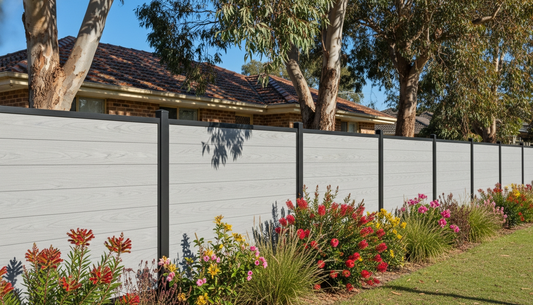
WPC stands for Wood Plastic Composite — a manufactured material that blends wood fiber with thermoplastic polymers to create boards, panels, and frame profiles that look like natural wood but perform completely differently. The same material science that makes composite fence panels low-maintenance and long-lasting also applies to composite gates, which is why the two product categories are increasingly sold and specified together.
Material: Recycled Wood Fiber + Recycled Polymer
The core of any WPC product is a blend of roughly 60% recycled wood fiber — sourced from sawdust, wood waste, and timber off-cuts — combined with roughly 40% recycled thermoplastic polymer, most commonly high-density polyethylene (HDPE). UV stabilizers, colorants, and bonding agents are added before the mixture is extruded into consistent board and frame profiles.
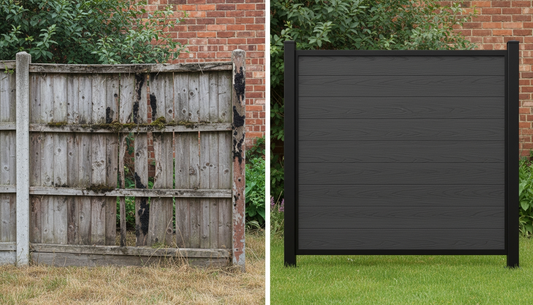
The wood fiber gives the material its natural look and texture. The polymer component provides water resistance, dimensional stability, and resistance to rot, mold, and insect damage — the three things that cause most wood fences and gates to fail within 10–15 years. Because the color and additives run through the full depth of the board, the surface doesn't rely on a paint or stain layer that can chip, peel, or wear thin.
Standard WPC vs Co-Extruded (Capped) WPC

There are two main construction types, and the difference matters for both fence panels and gate frames.
Standard (uncapped) WPC is extruded in a single pass, with a uniform composition all the way through. It's a solid, cost-effective product suitable for most residential applications, but the surface is more porous and can be more prone to staining, scuffing, and gradual fading in high-UV climates.
Co-extruded (capped) WPC adds a separate protective polymer shell — typically 0.5–1.5mm of pure HDPE — bonded to the outer surface during manufacturing. This cap layer is non-porous, more scratch- and stain-resistant, and significantly better at resisting UV fade over time.
For composite gates specifically, the frame and infill boards are usually built from the same material grade as the matching fence panels, while hinges, latches, and hardware are separate components (covered later in this guide).
Why US Homeowners and Builders Are Switching to Composite Fencing in 2026
The shift toward composite fencing isn't just a design trend — it's a response to the real, recurring costs and headaches of wood fencing across US climates, from humid southern summers to freeze-thaw winters in the Midwest and Northeast.
Performance Across US Climates
Moisture and humidity are the primary enemy of wood fencing in much of the country. Wood absorbs moisture, swells, warps, and eventually rots — and pressure-treated lumber still needs periodic staining or sealing to slow the process. WPC composite typically has water absorption rates below 2% in standardized testing, so boards don't swell, cup, or split the way wood does.
Freeze-thaw cycles in northern and mountain states cause repeated expansion and contraction in materials that hold moisture. Because composite absorbs so little water, freeze-thaw cycling has minimal impact on its structural integrity compared to wood.
Intense UV exposure, especially across the Sun Belt (Texas, Arizona, Florida, California), accelerates fading and surface breakdown in both wood and lower-grade plastics. Quality WPC includes UV stabilizers throughout the material, and co-extruded products with a protective cap layer hold their color significantly longer in high-sun regions.
Termites and wood-boring insects are a serious, costly problem for wood fencing in much of the South and parts of the West. Composite fencing contains no food source for termites, eliminating this risk entirely.
Composite vs Wood vs Vinyl vs Metal — Quick Comparison
| Feature | Composite WPC | Pressure-Treated Wood | Vinyl (PVC) | Aluminum/Steel |
|---|---|---|---|---|
| Lifespan | 20–30+ years | 7–15 years | 20–25 years | 20–30+ years |
| Annual maintenance | None required | Staining, sealing | Occasional cleaning | Occasional touch-up |
| Moisture/termite resistance | Excellent | Poor–Moderate | Excellent | Excellent (rust risk for steel) |
| UV resistance | Good–Excellent | Poor | Moderate | Good |
| Natural wood look | Yes | Yes | No | No |
| Privacy options | Excellent | Excellent | Good | Limited (open styles) |
| Matching gates available | Yes | Yes | Yes | Yes |
| Typical cost per linear ft | $40–$80 | $15–$30 | $25–$45 | $30–$60 |
The table tells most of the story: wood's lower upfront price gets eaten up over time by staining, repairs, and early replacement. For a full head-to-head, see our dedicated composite fencing vs wood comparison. If vinyl is your main alternative, our composite vs vinyl fencing guide breaks down the differences in detail.
Composite Fencing Costs in the USA (Materials, Gates, Installation)
Pricing transparency has historically been weak in this category — many retailers quote "starting at" prices that don't reflect what most projects actually cost once gates, posts, and installation are included. Here's a realistic 2026 snapshot.
Fence Panel Pricing
Composite fencing typically runs $40–$80 per linear foot installed, depending on height, board profile, and brand. Premium national brands often price toward the top of that range — or above it for certain product lines — while factory-direct WPC from established manufacturers can land meaningfully lower without sacrificing the core material specification (recycled content ratio, co-extrusion, UV stabilizers).
Gate Pricing — Often Overlooked

Gates are frequently left out of fencing budgets entirely, which causes painful surprises later. As a rough guide for 2026:
- Pedestrian (walk) gates: roughly $200–$400 including basic hardware
- Double gates: roughly $400–$800
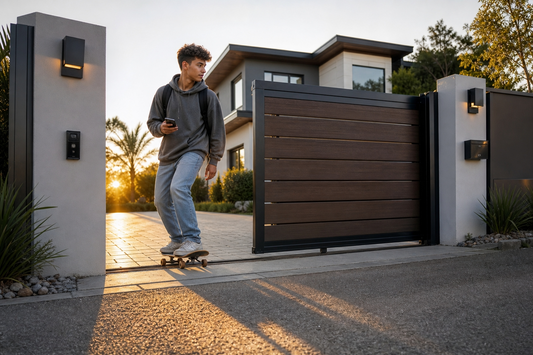
- Driveway gates: $600 and up, depending on width, reinforcement, and whether automation is included
Because a gate needs to match the fence's color, profile, and post system, it's almost always more economical to source the gate and fence as a coordinated set rather than mixing a composite fence with a generic wood or metal gate. Our composite gate cost guide breaks pricing down by gate type, and our composite fencing cost guide covers the full per-foot picture including posts and installation labor.
Why Factory-Direct Pricing Looks So Different
Composite fencing is manufactured almost entirely from raw material (recycled wood fiber and HDPE) plus tooling and labor — there's no complex supply chain of proprietary components the way there is for, say, electronics. When a US brand sources from a Chinese WPC factory, adds its own branding, warehousing, distribution layers, and retail markup, the price to the end customer can be 1.5–2x what the same specification costs factory-direct. That gap is the single biggest reason factory-direct sourcing has become a serious option for contractors, dealers, and even larger homeowner projects — covered in detail later in this guide.
Composite Fencing vs Wood, Vinyl, Metal: Quick Comparison
Beyond the cost table above, the right material often comes down to the specific job:
Choose composite when you want a true wood look with zero ongoing maintenance, strong resistance to humidity, termites, and UV, and the ability to match fencing and gates in the same color and profile.
Wood still makes sense for tight budgets, temporary fencing, or situations where a custom on-site build (irregular shapes, steep slopes) is easier with traditional lumber.
Vinyl is a reasonable alternative where a cleaner, more uniform "plastic" look is acceptable and budget sits below composite — though it can look less natural and is more prone to cracking in very cold climates.
Metal (aluminum/steel) dominates open-style fencing (pool enclosures, estate fencing) where sightlines matter more than privacy, but it doesn't offer the warm, wood-look aesthetic that drives most composite purchases.
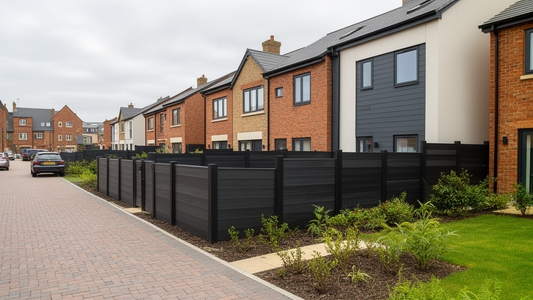
For most US homeowners replacing an aging wood privacy fence, composite fencing with a matching composite gate has become the default upgrade path — which is exactly why this guide treats fencing and gates as one connected category rather than two separate products.
Panel Sizes, Post Systems and Matching Gate Options
Standard Panel and Gate Dimensions

US composite fence panels are typically sold in heights of 4, 5, 6, and 8 feet, with 6-foot privacy fencing being the most common residential specification. Panel widths usually run 6 or 8 feet between posts. Composite gates are sized to match — single pedestrian gates typically span 3–4 feet, double gates 6–8 feet, and driveway gates anywhere from 10 to 16+ feet depending on vehicle clearance needs. Full dimensions, board profiles, and tolerances are covered in our composite fence panel sizes guide Post Systems
Composite panels are hung on post systems rather than relying on the boards themselves for structural strength. Options include aluminum-reinforced composite posts, steel-core posts (recommended for gate openings and taller privacy sections), and fully composite-wrapped posts for a uniform look. Gate openings in particular need a post system rated for the additional load and the repeated stress of swinging hardware — something worth confirming with your supplier before ordering.
Matching Gates to Your Fence
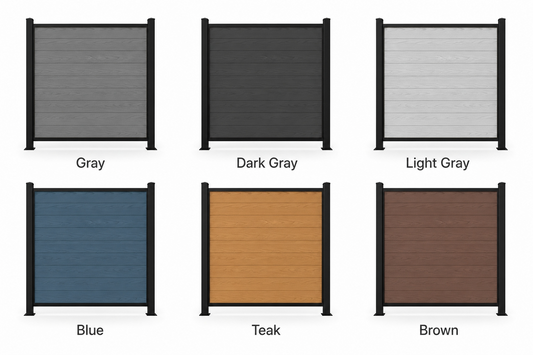
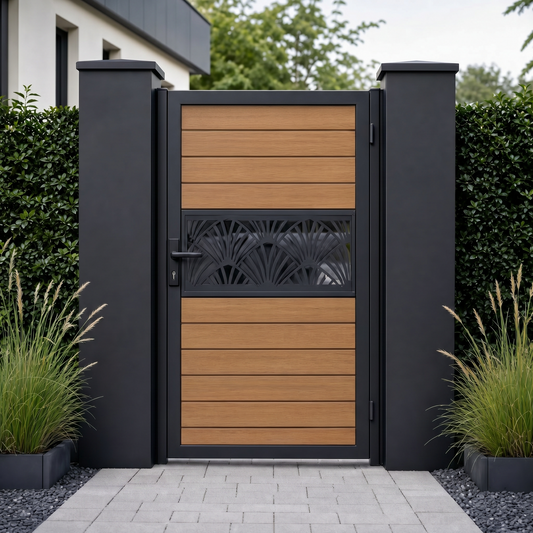
The biggest practical advantage of buying fencing and gates together is color and profile matching. A composite gate built from the same board stock as your fence panels — with a frame finished in a complementary or matching tone — looks like a single designed system rather than a fence with a mismatched gate bolted in. This matters both for curb appeal and for HOA approval, where a "matching materials" requirement is common.
Codes, HOA Approval and Pool Fence Compliance Basics
Local Codes and Permits
Most US municipalities regulate fence height (commonly 4 feet in front yards and 6 feet in back yards), setback from property lines, and sometimes materials. Many jurisdictions require a permit for fences over a certain height, especially for fences enclosing a pool. Always check with your local building department before finalizing a design — requirements vary significantly by city and county.
HOA Rules
If your property is in a homeowners association, the HOA's architectural guidelines may be stricter than local code — often specifying approved colors (commonly black, brown, or natural wood tones), maximum heights, and sometimes approved materials lists. Composite fencing frequently satisfies "natural wood appearance" requirements, but it's worth submitting product specs and samples as part of your HOA application. Our dedicated composite fencing & HOA approval guide walks through the submission process.
Pool Fence Codes
If your fence or gate encloses a swimming pool, additional rules apply almost everywhere in the US, generally based on the International Swimming Pool and Spa Code (ISPSC) or similar state adaptations. Typical requirements include a minimum barrier height (commonly 48 inches, with some states requiring 60 inches), maximum gap sizes that prevent a small child from passing through, limited ground clearance, and — critically — self-closing and self-latching gates with latches mounted out of easy reach of young children. Because these requirements affect both the fence panels and the gate hardware, we cover them together in our pool fence codes & composite compliance guide.
Buying Factory-Direct from China: What US Buyers Need to Know
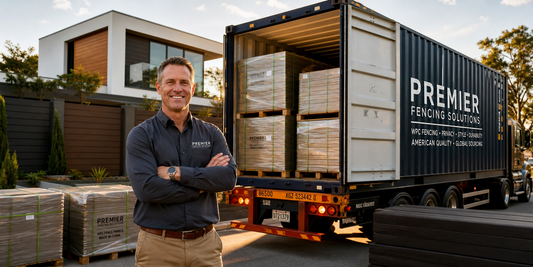
A growing share of the US composite fencing and gate market — including products sold under well-known US brand names — originates from Chinese WPC manufacturers. Buying factory-direct simply means working with that manufacturer (or a manufacturer at the same tier) directly, rather than through several layers of brand, distributor, and retail markup.
What Changes When You Buy Factory-Direct
You're typically working with FOB or CIF pricing, ordering by container rather than by pallet, and managing freight, customs clearance, and (for larger buyers) duties yourself or through a freight forwarder. In exchange, the per-unit cost of fencing and gates can drop substantially compared to branded retail pricing for an equivalent specification. Our importing composite fencing & gates from China guide walks through the process step by step, and our composite fencing wholesale guide explains how pricing tiers and minimum order quantities typically work.
Vetting a Manufacturer
Not every "factory" is actually a factory — many are trading companies reselling other manufacturers' products at a markup with no real quality control of their own. Before committing to an order, it's worth requesting certifications and test reports, reviewing physical samples (not just photos), and asking direct questions about production capacity and quality control. Our manufacturer vetting checklist and sample request guide cover exactly what to look for.
How to Choose the Right Supplier and Range for Your Project or Store
Whether you're a homeowner replacing a single backyard fence, a contractor pricing a multi-lot development, or a dealer building out a new product category, the same core checklist applies:
- Confirm the material spec — recycled content ratio, capped vs uncapped, UV stabilizer details.
- Get real samples — board sections and, if relevant, a gate hardware sample — not just marketing photos.
- Check certifications — especially if you're importing in volume; see our WPC fencing certifications guide.
- Plan fencing and gates together — matched color, profile, and post systems from the start avoid mismatched results and HOA friction later.
- Understand the full cost picture — panels, posts, gates, hardware, freight (if importing), and installation.
Bohai Woods manufactures composite fencing and matching composite gates for the US market and supports both factory-direct container orders and smaller trial/sample orders for dealers and contractors evaluating the category for the first time.
Frequently Asked Questions
Q: What is composite fencing made of?
A: Composite fencing is made from a blend of recycled wood fiber (typically around 60% of the mix) and recycled thermoplastic polymer such as HDPE (typically around 40%), plus UV stabilizers and colorants added during manufacturing. The mixture is extruded into board profiles. Higher-grade co-extruded (capped) products add a separate protective polymer layer to the outer surface for improved durability and color retention.
Q: Is composite fencing worth the extra cost compared to wood?
A: In most cases, yes, over the life of the fence. Composite costs more upfront — often two to three times the per-foot price of pressure-treated wood — but requires no staining, sealing, or repainting, and typically lasts 20–30 years compared to 7–15 years for wood. When you add up wood's recurring maintenance costs and earlier replacement, the total cost of ownership for composite is usually lower over a 10–20 year horizon.
Q: Can I get matching gates for composite fence panels?
A: Yes. Composite gates are built using the same board stock and color as matching fence panels, with a reinforced frame (often aluminum- or steel-cored) and separate hardware — hinges, latches, and locks. Buying fencing and gates as a coordinated set is the easiest way to ensure consistent color, profile, and post compatibility, and it's increasingly how both branded and factory-direct suppliers package their composite fencing products.
Q: Do I need a permit or HOA approval for composite fencing?
A: It depends on your location. Many municipalities require a permit for fences above a certain height (often 6 feet) or for any fence enclosing a pool, while HOAs often have their own architectural review process with rules on height, color, and materials — sometimes stricter than local code. Always check both your local building department and your HOA's guidelines before finalizing your design, and budget time for HOA review, which commonly takes a couple of weeks.
Q: How long does composite fencing last in the USA climate?
A: Quality composite fencing typically lasts 20–30 years across most US climates, with many manufacturers offering warranties in that range. Co-extruded (capped) products generally outperform standard/uncapped WPC in high-UV regions like the Sun Belt and in humid climates in the Southeast. Compared to pressure-treated wood, which often needs full replacement within 10–15 years, composite fencing represents a significant lifespan upgrade with essentially no annual maintenance.
Q: Can I buy composite fencing and gates factory-direct from China?
A: Yes — many US composite fencing brands already source from Chinese WPC manufacturers, and buying factory-direct simply removes several layers of markup. This typically means ordering by container with FOB or CIF pricing and managing freight and customs (often with help from a freight forwarder). It works best when you've vetted the manufacturer properly, reviewed physical samples, and understand the full landed cost — all covered in this guide's sourcing sections.
Ready to Get Started?
Browse Bohai Woods' factory-direct composite fencing and matching gate ranges for the US market — competitive FOB/CIF pricing, sample kits available, and support for both container orders and smaller trial orders for dealers evaluating the category.
Explore Bohai Woods' USA composite fencing & decking program — include your project size, preferred color/profile, and whether you need matching gates for an accurate factory-direct quote.
Tags:
Previous
How Much Does Composite Decking Cost in the UK? 2026 Complete Price Guide
Next
Composite Fencing Cost USA: 2026 Price Guide