Composite Fencing vs Timber UK: Cost & Maintenance
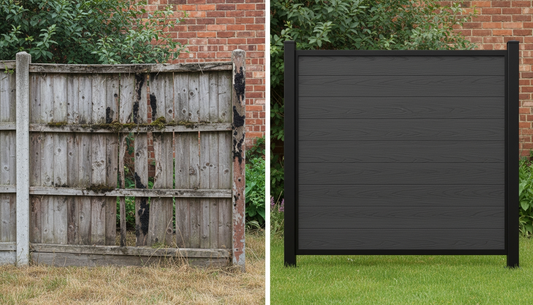
Short answer: composite fencing is not automatically better value than timber, and timber is not automatically cheaper once the whole installed system is counted. Compare like with like: the same boundary length, height, privacy level, posts, foundations, gates, delivery, installation, maintenance plan and warranty. Timber often wins on initial price and natural appearance. Composite can win where consistent panels and a lower routine finishing burden justify the higher first cost.
This guide gives UK homeowners, landscapers and trade buyers a calculation they can audit. It does not use a national “average panel price” to predict your project, because a retail timber panel, a complete WPC system delivered from a factory and an installed contractor quote are three different commercial products.
Composite Fencing vs Timber: Quick Comparison
| Decision | Composite / WPC fencing | Timber fencing | What to verify |
|---|---|---|---|
| Initial cost | Usually higher for the board-and-post system; factory MOQ and freight can dominate small orders. | Often lower through local retail and merchant channels. | Delivered-to-site or fully installed price, with VAT, gates, removal and foundations treated consistently. |
| Appearance | Consistent colour and profile; capped and uncapped finishes differ. | Natural variation, grain and repairable individual components. | Full-size physical samples outdoors, not screen colours or a small swatch. |
| Routine care | Normally washing and inspection rather than a staining schedule, but algae, dirt and damaged components still need attention. | The treatment and inspection cycle depends on species, preservative, coating, cut ends and exposure. | Written maintenance instructions from the exact supplier for both systems. |
| Movement and fixing | Thermal movement and system clearances must be allowed for. | Moisture movement, checking, fastener staining and decay at vulnerable details must be managed. | Installation manual, post system, clips, fasteners and site-specific foundations. |
| Wind exposure | A solid panel still acts as a sail. Open or half-trellis sections can reduce the solid area. | Solid closeboard and lap panels also transfer wind load into posts and foundations. | Site exposure, panel solidity, post spacing, foundation design and any project-required structural evidence. |
| Evidence and warranty | Varies by manufacturer and exact profile. A general material claim is not a product report. | Varies by species, grade, treatment and supplier. | Report number, test method, exact product scope, warranty exclusions and claim schedule. |
How to Compare the Real Installed Cost
Start with one measured boundary and ask both suppliers to price the same scope. The useful comparison is not “price per panel”; it is total cost to create a finished boundary.
Initial project cost = panels or boards + posts + rails/caps + gates + fixings + foundations + installation + old-fence removal + delivery + taxes and duties.
For BOHAI’s standard fencing system, one set is 1800 × 1800 mm. It is commonly described as 6 ft × 6 ft, but 1800 mm is shorter than a true six feet. Divide each straight run by the actual 1.8 m bay width and round up. A run of N bays needs N + 1 posts, and a gate opening needs two gate posts. Count corners, level changes and separate runs explicitly. This prevents a low panel price from hiding a short post schedule.
Then compare ongoing cost over the period you expect to own or manage the property:
Whole-period cost = initial project cost + scheduled cleaning or finishing + inspections + repairs + replacement components − any residual value you can reasonably evidence.
Enter supplier quotes rather than national averages. A timber system with a robust treatment specification may need a different care cycle from an untreated budget panel. A composite system may reduce finishing work, but it still requires maintenance and its warranty is not the same thing as predicted service life. If you want to test several quotes, use our UK composite fencing cost guide and calculator.
What You Are Actually Comparing
BOHAI composite fencing
BOHAI’s confirmed WPC composition is approximately 60% wood powder, 30% HDPE and 10% additives. That statement describes the formulation; it does not mean every input is recycled, and it does not support a blanket “100% recyclable” claim. Buyers who need recycled-content evidence, an environmental product declaration or a named green-building credit should request the exact document before specifying.
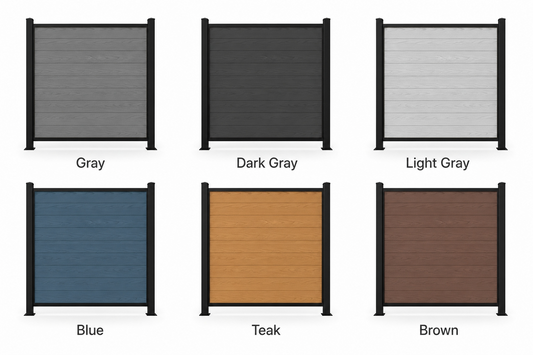
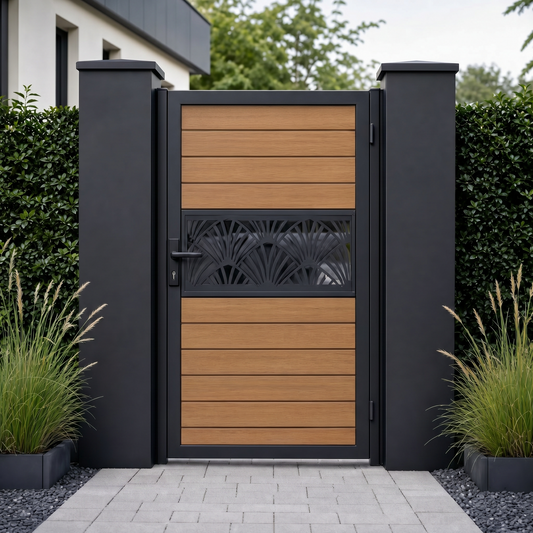
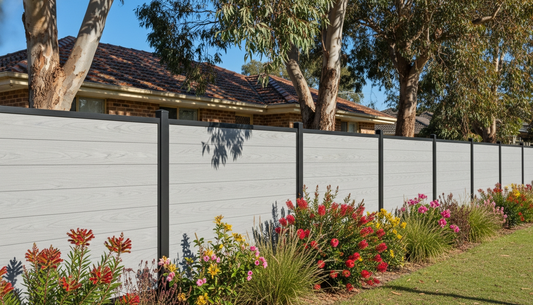
The standard privacy board is 180 × 24 mm with an effective cover of 172 mm once assembled. Calculate board quantity from the cover width, not the overall profile width. The complete standard set is 1800 × 1800 mm with aluminium posts; privacy, half-trellis, full-trellis and decorative options serve different screening and exposure requirements.
BOHAI fencing carries a 10-year stepped limited warranty. Read the written schedule, start date and exclusions rather than converting “10-year warranty” into a claim that every installation will last a fixed number of years.
Timber fencing
“Timber fencing” covers many different products: lap panels, closeboard systems, softwood or hardwood, factory-treated or site-finished material, timber or concrete posts, and several grades of rails and fixings. A fair quote must name the species or product grade, treatment, panel construction, posts, caps, fixings and any coating work.
Timber has advantages that composite cannot reproduce: authentic variation, straightforward cutting and repair, wide local availability and a lower entry price in many UK retail channels. Its maintenance and replacement assumptions should come from the selected timber system and site exposure—not from a universal timetable copied from another product.
Maintenance: Lower Is Not the Same as Zero
Composite fencing does not normally need a decorative stain or paint system, but it still needs periodic inspection and cleaning. Shaded surfaces can collect algae and dirt. Drainage paths, caps, loose fixings, gate hardware and contact with soil or landscaping should be checked. Use the cleaning method allowed by the written product instructions; aggressive pressure washing can damage some finishes.
Timber care depends on how it was supplied and detailed. Check treatment class, cut-end treatment, coating compatibility, ground contact, drainage around posts and fastener material. Some owners prefer weathered timber and accept colour change; others plan a regular finish cycle. Put that chosen cycle and its labour cost into the comparison instead of assuming every timber fence receives identical treatment.
UK Rain, Shade and Freeze–Thaw Conditions
Moisture performance is a system question. Composite boards do not decay in the same biological way as untreated timber, but a fence can still fail through unsuitable foundations, loose posts, trapped debris, corroding fixings or damaged components. Timber performance likewise depends heavily on treatment, detailing and whether end grain or posts remain wet.
Do not turn a material-level statement into a project guarantee. Ask how the exact boards, posts, caps and fasteners are intended to drain, how damaged pieces are replaced and which environments the warranty excludes.
Wind: Compare Panel Solidity and Foundations
A heavier panel is not automatically more wind resistant. Wind pressure is transferred through the boards and rails into posts and foundations. A full privacy panel presents more solid area than a half-trellis or open-trellis panel, regardless of whether it is timber or composite.
BOHAI holds Intertek report 250710027GZU-001 for one 1.8 × 1.8 m fencing configuration using 170 × 24 mm boards and 80 × 80 mm 6063-T5 aluminium posts. It sustained 372.1 N/m² of uniform horizontal load for three minutes without failure. The test used an in-house method agreed with a client, not a recognised published standard, and it does not design the foundation for your soil or exposure. Treat it as evidence about that tested assembly only.
For an exposed, coastal or elevated boundary, give the installer or engineer the site location, height, panel solidity, post spacing and proposed foundation. Do not copy a universal post depth from a general article.
Colour, UV and Appearance
Timber changes colour as it weathers; the rate depends on species, finish and exposure. Composite also changes outdoors, and a capped product is not “fade-proof”. Compare physical samples in the intended light, ask whether the sample is the same production colour and confirm what colour change the warranty actually covers.
BOHAI’s capped co-extrusion boards add a protective outer layer over the WPC core, while classic profiles expose the uncapped composite surface. That construction difference is useful, but it does not justify a universal fade percentage or a promise that every colour remains unchanged.
Which Option Fits Which Project?
Timber is often the better fit when:
- The lowest initial spend matters more than reducing future finishing work.
- The owner wants authentic grain and natural variation.
- The boundary is temporary or must match an existing timber run.
- Small quantities and immediate local availability are essential.
- The specified timber grade, treatment and maintenance plan are already accepted.
Composite is often worth shortlisting when:
- A consistent colour and manufactured profile are priorities.
- The owner wants to avoid a routine decorative staining schedule.
- A distributor, developer or contractor can use the supplier’s minimum quantity efficiently.
- The whole board, post and accessory system can be specified together.
- The exact test evidence and warranty are adequate for the project brief.
For BOHAI’s current styles, dimensions, MOQ and documentation boundaries, see the composite fencing range, the UK composite fence panels specification guide and the fencing documentation checklist.
Wholesale and Factory-Direct Orders
A factory-direct quote should not be compared with one retail timber panel on a shelf. BOHAI’s fencing MOQ is 70 sets. Ask for the quotation to identify the exact panel style, colour, board profile, number of sets, post schedule, accessories, packing, trade term, port, production window and document list. Freight, import charges, inland delivery and installation must be added according to the agreed terms.
Before placing an order, approve a physical sample and record the colour, texture and profile on the purchase order. For mixed styles or colours, confirm how the 70-set MOQ is allocated. Request the current warranty schedule rather than relying on the summary in this article.
Composite vs Timber Fencing FAQ
Is composite fencing cheaper than timber in the UK?
It is often more expensive at the initial system level, while locally stocked timber often has the lower entry price. The whole-period result depends on the actual delivered or installed quotes, the chosen timber treatment plan, repairs and how long the boundary will remain. Use current project figures; there is no honest nationwide break-even year.
Does composite fencing need maintenance?
Yes. It normally avoids a decorative staining schedule, but still needs inspection and cleaning. Dirt and algae can collect, fixings or gate hardware can loosen, and damaged components need attention. Follow the exact supplier’s care instructions.
How long does composite fencing last?
Do not substitute a marketing lifespan for a written warranty. BOHAI fencing has a 10-year stepped limited warranty; service life depends on the system, exposure, installation and maintenance. Ask competing suppliers for the same written evidence and exclusions.
Is composite fencing stronger in wind than timber?
Not as a universal rule. Panel solidity, height, post spacing, connections, foundations, soil and exposure govern the system. A solid composite panel can impose high wind load just as a solid timber panel can. Half-trellis or open designs reduce solid area but still require a site-appropriate foundation.
Is WPC fencing made from recycled material?
Do not assume it. BOHAI’s confirmed formulation is approximately 60% wood powder, 30% HDPE and 10% additives, but that alone does not prove recycled content. If a tender requires a recycled-content percentage or environmental declaration, request the specific supporting document.
What are the disadvantages of composite fencing?
Higher initial cost, heavier components, thermal movement, factory MOQ for direct orders, long-board freight and a less naturally varied appearance. Product evidence and replacement availability also differ by supplier. These trade-offs should be included in the same comparison as lower routine finishing work.
Request a like-for-like fencing quotation
Send the boundary length, height, number of corners and gates, exposure, preferred privacy level, quantity and destination. We will return the panel and post schedule, current commercial terms and the documents available for the exact system.
Tags:
Previous
How to Install WPC Fence UK: Complete Step-by-Step Guide
Next
Composite Decking UK: The Complete Buyer's Guide (2026)