Composite Decking Supplier UK — Factory Direct from Bohai Wood
For UK distributors, builders merchants, contractors, and housing developers, the question is no longer whether to use WPC composite decking — it's where to source it. The difference between buying through a UK-based intermediary and sourcing directly from a Chinese manufacturer is, in most cases, between 30% and 40% of your project budget. This guide explains exactly how factory-direct supply works, what to check before placing an order, and why Bohai Wood has become the preferred composite decking wholesale UK supply partner for importers across Britain.
Why UK Importers Source Composite Decking Directly from China
The UK composite decking market has matured considerably over the past decade. What was once a niche product confined to premium garden designers is now a standard specification on housing developments, commercial landscaping schemes, and trade merchant shelves nationwide. That growth has been accompanied by a structural shift in the supply chain: an increasing proportion of UK trade buyers are bypassing domestic distributors and sourcing directly from WPC manufacturers in China.
The logic is straightforward. Chinese WPC factories — particularly those in Guangdong and Zhejiang provinces — operate at a scale that simply cannot be replicated in the UK. Automated extrusion lines running 24 hours a day, proximity to raw materials, and decades of manufacturing refinement combine to produce boards that meet or exceed the specification of branded UK products, at a fraction of the ex-factory cost.
Price Advantage: Factory Cost vs UK Distributor
When a UK buyer purchases composite decking from a domestic brand or distributor, that product has already passed through at least two or three commercial margins. The Chinese factory sells to an exporter or trading company, who sells to the UK importer or brand, who sells to the merchant, who sells to the contractor. Each layer adds 15–30%.
By contrast, a factory-direct buyer pays the manufacturer's trade price and ships the goods directly to their UK warehouse or site. The result, in concrete terms, is this: hollow uncapped WPC boards that a UK brand retails at £50–£65/m² can be sourced factory-direct for £28–£38/m² landed (inclusive of shipping and import duty). Capped co-extrusion boards retailing at £80–£100/m² through UK distributors are available factory-direct at £48–£62/m² delivered to UK port.
For a builders merchant placing a container order of 400m², the saving over buying from a UK supplier can exceed £15,000 on a single shipment. Over an annual volume, those figures are transformative for margin.
Quality Control: What to Verify
The legitimate concern with factory-direct sourcing is consistency. Unlike buying from a UK brand with established QC processes and a local warranty team, you are placing trust in a factory on the other side of the world. That trust must be earned through documentation, not assumed.
The critical quality checkpoints for WPC composite decking are: material composition (the board should be 60% recycled hardwood fibre and 40% recycled HDPE, not fillers or softwood substitutes); surface texture consistency across a full production run; dimensional tolerance (boards should be within ±0.5mm of stated width and thickness); co-extrusion cap integrity for capped grades; and colour consistency across batches. Any factory unwilling to provide third-party test reports on these parameters should be treated with caution.
How to Vet a Chinese WPC Decking Manufacturer
Not all Chinese WPC manufacturers operate to the same standard. The sector includes both large, ISO-certified factories with established export programmes and smaller operations that produce acceptable samples but struggle with batch consistency. Knowing how to distinguish between them before placing an order is the most valuable skill a UK importer can develop.
Certifications Checklist (CE, REACH, Slip Rating, Fire Rating, ISO 9001)
Certifications are the foundation of any responsible procurement decision. For WPC composite decking entering the UK market, the minimum documentation package you should request before placing an order is as follows. Full guidance on what each certificate means is covered in our article on WPC decking certifications UK.
CE Marking confirms that the product has been tested to relevant European harmonised standards. Post-Brexit, CE marking remains widely accepted in GB markets, though some specifiers may request UKCA marking for public procurement contracts. A legitimate CE declaration of performance should reference a specific harmonised standard and a notified body number.
REACH Compliance is the European chemicals regulation that restricts the use of hazardous substances. A REACH certificate confirms that the boards do not contain substances of very high concern above threshold limits. This is non-negotiable for any product entering the UK supply chain.
Slip Resistance (BS 7976-2 / Class C) is critical for commercial applications and increasingly required on housing developments. The pendulum test result should show a PTV (Pendulum Test Value) of 36 or above for wet conditions, which equates to Class C — the minimum for external decking.
Fire Rating (BS EN 13501-1) classifies the reaction of the material to fire. WPC composite decking typically achieves Class C or Class D. For commercial projects, balconies, and anything adjacent to a building, the specification should confirm the fire class before ordering.
ISO 9001 demonstrates that the factory operates a documented quality management system. It does not guarantee the product is good — but it does mean the factory has processes for catching defects, tracing non-conformities, and managing production consistency.
Factory Audit: What Good Looks Like
A reputable WPC manufacturer will welcome the prospect of a factory audit, either in-person or via a third-party inspection company. When evaluating a factory, the key indicators of a reliable operation are: a dedicated R&D department capable of adjusting formulations; automated extrusion lines with real-time temperature and pressure monitoring; an in-house laboratory for raw material and finished product testing; a structured production planning system that separates UK-market runs from domestic or other export orders; and a documented pre-shipment inspection process.
Factories that resist providing audit reports, cannot supply production photos, or offer suspiciously short lead times (under three weeks for a new product run) are red flags. Similarly, a factory that cannot supply references from existing UK or European customers should be approached with caution.
The Sample Request Process
No responsible trade buyer should commit to a container order without first approving physical samples. The process for composite decking samples from China is straightforward. You specify the board profile, dimensions, colour, and grade (hollow or solid, capped or uncapped), the factory ships a representative sample — typically a 300–500mm cut section per profile — via DHL or FedEx (3–7 days to UK), and you evaluate the sample against your specification.
What to check: surface texture and emboss pattern consistency; colour match to the stated swatch; edge profile accuracy and dimensional tolerance; the feel and rigidity of the cap layer on capped grades; and the weight of the board as an indicator of material density and composition. A board that feels significantly lighter than expected may indicate a higher-than-stated void ratio or filler substitution.
Shipping and Logistics: China to UK
The logistics of importing composite decking from China are straightforward once you understand the timeline and cost structure. Most Shandong-based factories ship from Qingdao or Tianjin; Zhejiang factories typically use Ningbo or Shanghai. All four ports offer regular direct and transhipment services to Felixstowe, Southampton, and Tilbury.
Lead Times (Production + Shipping)
The total lead time from order confirmation to UK port arrival is typically 8–12 weeks, broken down as follows. For a repeat order of a stocked product, production takes 15–25 days depending on order volume and the factory's existing schedule. For a first order requiring colour or profile customisation, allow 25–35 days for production. Sea freight from Chinese ports to UK ports (Felixstowe or Southampton) takes 28–35 days on most direct services, and 35–42 days on transhipment routes. Combined, a realistic order-to-arrival window is 7–10 weeks for standard products and up to 12 weeks for bespoke orders.
Plan your stock procurement accordingly, particularly for spring/summer peak demand periods. Many experienced UK importers place their Q2 orders in January or February.
Container Options (20ft vs 40ft FCL)
Composite decking ships as full container loads (FCL), which offers the best per-unit freight rate. A 20-foot container holds approximately 200–300m² of composite decking boards depending on board weight and profile; a 40-foot container holds approximately 400–600m². FCL rates from China to UK ports currently run at approximately £1,800–£2,800 for a 20ft and £2,800–£4,200 for a 40ft, though freight rates fluctuate with market conditions — get a current rate from your freight forwarder at the time of ordering.
For buyers not yet ready for a full container, some suppliers offer LCL (less-than-container load) consolidation, though the per-m² freight cost is significantly higher and lead times less predictable.
UK Import Duties and Customs Codes
WPC composite decking falls under commodity code 3918.10 (floor coverings of polymers of vinyl chloride, in rolls or tiles, other). The standard UK import duty rate for this commodity code is approximately 3.7% of the customs value (CIF — cost, insurance and freight). VAT at 20% is applied on top of the CIF value plus duty. A UK-based freight forwarder or customs broker will handle the Entry Summary Declaration and customs clearance for a fee of £150–£300 per shipment. Ensure your supplier provides a commercial invoice, packing list, bill of lading, certificate of origin, and relevant certificates (CE, REACH) as part of the shipping documentation package.
Bohai Wood — Your UK Composite Decking Supply Partner
Bohai Wood is a Shandong-based WPC manufacturer supplying UK importers, distributors, builders merchants, and contractors with factory-direct composite decking. Our facility operates 50+ production lines and has supplied over 1,000 clients globally, with a significant and growing proportion in the United Kingdom and wider European market.
Factory Overview (50+ Production Lines, 1,000+ Clients)
Our factory in Shandong province is equipped to produce the full range of WPC composite decking profiles demanded by the UK market: hollow uncapped, hollow capped (co-extrusion), solid uncapped, and solid capped, in both grooved and square edge profiles. Board widths of 135mm, 140mm, and 150mm are available as standard, with lengths of 2.2m, 3m, 3.6m, 4m, and 4.8m to order.
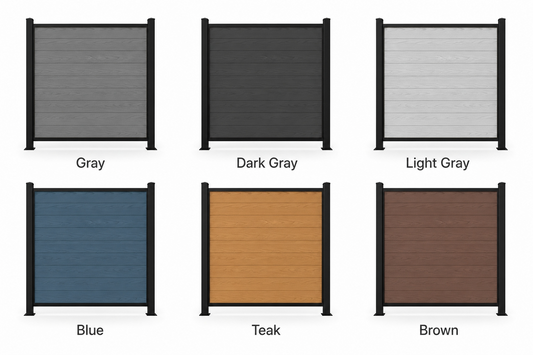
All boards are manufactured from 60% recycled hardwood fibres and 40% recycled HDPE polymer. Co-extrusion grades carry a protective cap layer of 0.5–1.5mm that significantly improves resistance to scratching, staining, UV fade, and moisture ingress. Colour options for the UK market are Charcoal, Light Grey, Teak, Walnut, Cedar, and Dark Brown — all available in both grooved and square edge profiles.
Every production run is subject to in-house quality inspection covering dimensional tolerance, surface quality, colour consistency, and mechanical performance. Third-party test reports for CE, REACH, BS EN 13501-1 fire rating, and BS 7976-2 slip resistance are available for every product in our composite decking range.
Our 25-year product warranty is supported by documented performance testing and applies to all boards supplied to UK buyers under standard installation conditions.
MOQ, Pricing and Payment Terms
For UK importers, the standard minimum order is one 20-foot container (approximately 200–300m² depending on board profile). Trial orders at smaller volumes can be discussed for new accounts, though the per-m² cost will be higher than FCL pricing.
Pricing is tiered by volume. A 20ft FCL order typically achieves a landed UK cost of £28–£55/m² depending on board grade (hollow uncapped through to solid capped). A 40ft FCL brings the per-m² cost down by approximately 8–12% versus a 20ft equivalent, making the larger container the preferred option for buyers with sufficient storage capacity.
Standard payment terms for new accounts are 30% deposit on order confirmation, with the balance payable against copy documents before shipment. Established accounts with a trading history can discuss open account or letter of credit arrangements. All pricing is quoted in GBP or USD at the buyer's preference.
Start Your Enquiry
The most efficient way to start a factory-direct sourcing conversation is to send Bohai Wood a brief covering: your required product specification (board type, profile, colour, length), your estimated annual or container volume, your target delivery location in the UK, and any certification requirements specific to your end market. We will respond within 24 hours with a preliminary price indication, and can arrange physical samples to arrive at your UK address within 5–10 working days.
FAQ
Q: Is it safe to buy composite decking directly from China?
A: Yes, provided you vet the manufacturer properly. A legitimate Chinese WPC factory will supply full certification documentation (CE, REACH, ISO 9001, fire rating, slip resistance), provide physical samples before commitment, and accept pre-shipment inspection. The risk with factory-direct sourcing lies not in the origin country but in failing to verify the specific factory. Request documentation, speak to existing UK buyers if possible, and do not place a container order without approving samples.
Q: How much cheaper is factory-direct composite decking?
A: Typically 30–40% less than equivalent UK-branded or retail products when compared on a landed-to-UK cost basis. For example, hollow capped WPC boards retailed through UK distributors at £70–£85/m² can be sourced factory-direct at £42–£55/m² landed, inclusive of sea freight and import duty. The saving increases with volume, as larger container orders attract lower per-m² freight costs and may qualify for volume price tiers.
Q: What certifications should a composite decking supplier have?
A: The minimum certification package for the UK market is CE marking with a supporting declaration of performance, REACH compliance, BS EN 13501-1 fire rating, BS 7976-2 slip resistance test report, and ISO 9001 quality management certification. For projects with specific planning conditions or public procurement requirements, additional documentation such as a UKCA declaration or Environmental Product Declaration (EPD) may be requested. Bohai Wood holds all standard certifications and can supply full documentation packs on request.
Q: How long does shipping from China to the UK take?
A: Sea freight from Qingdao or Tianjin to Felixstowe or Southampton takes approximately 25–35 days on direct services. Including production lead time (15–25 days for stocked products, up to 35 days for bespoke runs), the total order-to-UK-port lead time is typically 7–10 weeks. Allow an additional 3–7 days for customs clearance and onward delivery to your UK warehouse.
Q: What is the minimum order for factory-direct composite decking?
A: The standard minimum for factory-direct WPC decking from Bohai Wood is one 20-foot container, which holds approximately 200–300m² of boards depending on profile and length. For buyers new to direct import, smaller trial orders can be accommodated, though the per-m² cost will be higher than FCL pricing due to freight consolidation costs. Contact us to discuss what makes sense for your volume and timeline.
Ready to Get Started?
Ready to source composite decking factory-direct? Get a quote from Bohai Wood at /pages/contact — response within 24 hours.
Tags:
Previous
Composite Decking Boards UK: Specs, Sizes & Wholesale 2026
Next
How Much Does Composite Decking Cost in the UK? 2026 Complete Price Guide