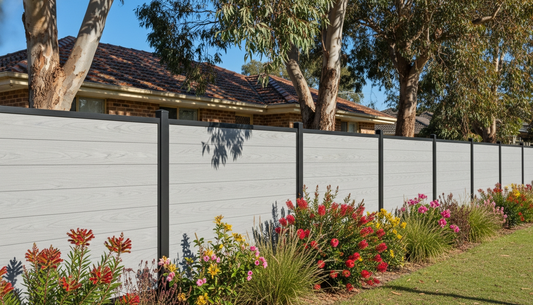
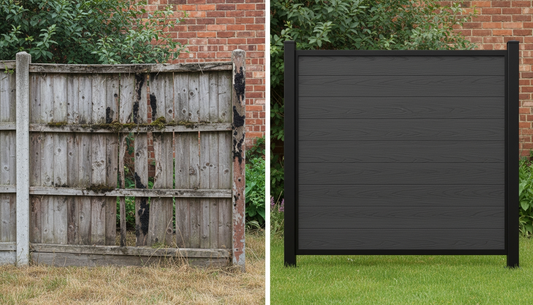
Class A Fire Rated Composite Cladding: What US Architects Need to Know in 2026
Class A fire rated composite cladding for US projects. ASTM E84 specs, NFPA 285 assemblies, costs, and what architects must specify. Free samples.
When a US project crosses 40 feet in height, the cladding specification stops being an aesthetic decision and starts being a fire engineering one. Class A fire rated composite cladding is the baseline most commercial architects now write into Division 07 — but the term is widely misused, and a Class A surface burning rating alone does not satisfy the International Building Code. This guide walks through what Class A actually certifies, where ASTM E84 ends and NFPA 285 begins, how WPC achieves the rating, and what to put in your spec section so the AHJ approves the submittal the first time. Bohaiwoods has supplied SGS- and ASTM-certified WPC cladding to projects in 80+ countries, and the points below are the questions we field every week from US architects.
Table of Contents
- What "Class A Fire Rated" Actually Means
- ASTM E84 vs NFPA 285: Why You Need Both
- Where the IBC Requires Class A Cladding
- How WPC Achieves a Class A Rating
- Class A WPC Cladding: Manufacturer Comparison
- Spec Section 074640 Checklist
- Five Mistakes Architects Make on Fire-Rated Façades
- Cost: Class A vs Class B vs Class C Cladding
- Sourcing Class A Cladding from China
- FAQ
What "Class A Fire Rated" Actually Means
Class A is a surface burning classification, not a fire resistance rating. It comes from ASTM E84, the Steiner Tunnel Test, which the IBC and IFC reference for interior and exterior finishes. The test runs a 25-foot tunnel for 10 minutes and reports two numbers: Flame Spread Index (FSI) and Smoke Developed Index (SDI).
To carry a Class A rating, a product must score FSI ≤ 25 and SDI ≤ 450. Class B sits at FSI 26–75, Class C at FSI 76–200. Anything above 200 is unrated for code-regulated surfaces. The lower the number, the slower flame propagates across the cladding surface during a fire event.
That sounds straightforward, but two caveats catch designers out. First, the test rates the product as tested — exact composition, thickness, color, and any factory coating. A Class A red panel does not automatically make the same line in walnut Class A; each SKU usually needs its own report. Second, ASTM E84 evaluates the panel face only. It says nothing about how the full wall assembly behaves when a window blows out two floors below.
ASTM E84 vs NFPA 285: Why You Need Both
For low-rise projects, an ASTM E84 Class A test report is usually sufficient documentation. Once a building is more than 40 feet tall and classified as Type I, II, III, or IV construction, the IBC adds NFPA 285. This is where many designers get tripped up — they assume Class A cladding is automatically NFPA 285 compliant. It is not.
NFPA 285 is a multi-story assembly test. The lab builds a two-story wall section, punches a window opening near the bottom, and ignites a 30-minute burner. Pass criteria include keeping the flame below 10 feet above the window and keeping temperatures under 1,000°F at the same height. The whole assembly is on trial: cladding, air barrier, water-resistive barrier, foam plastic insulation, fasteners, framing.
The practical consequence is that you cannot mix and match. An NFPA 285 listing belongs to a specific assembly recipe. Swap the insulation brand or the WRB and the listing no longer applies. When you specify WPC cladding for a mid-rise façade, request the full NFPA 285 listing, not just the E84 certificate.
Where the IBC Requires Class A Cladding
The 2024 IBC is the current model code most US jurisdictions reference. Class A surfaces and NFPA 285 assemblies are required in several specific situations that come up routinely in commercial work.
Exterior walls of Type I-IV buildings over 40 feet trigger NFPA 285 if the assembly contains foam plastic insulation, combustible WRBs, or combustible exterior cladding (IBC Section 1403.5). Egress routes, exit enclosures, and exit passageways require Class A interior finishes in Groups A, E, H, I, R-1, and R-2. High-occupancy assembly spaces — Group A — usually demand Class A on walls and ceilings throughout.
Wildland-urban interface zones add another layer. California Chapter 7A and the IWUIC reference WUI-compliant assemblies that often require ASTM E2632 or ASTM E2707 testing on top of E84. For projects in Los Angeles, San Diego, or Boulder counties, Class A is not the finish line — it is the entry ticket.
How WPC Achieves a Class A Rating
WPC — wood-plastic composite — combines a polymer matrix (HDPE or PVC) with wood flour, mineral fillers, and additive packages. The base resin is the flammability problem; the formulation solution is the fire retardant chemistry built into it.
Three approaches show up in the supply chain. Mineral-loaded co-extrusion presses an ASA or PE outer cap over a heavily filled core, where mineral content can exceed 60% by weight to push FSI under 25. Halogenated flame retardants (brominated or chlorinated) interrupt the radical chain reaction in the gas phase and are effective but face increasing regulatory pressure in the EU. Intumescent additives — typically APP (ammonium polyphosphate) plus a char-forming polyol — swell on heating and form an insulating crust that protects the substrate below.
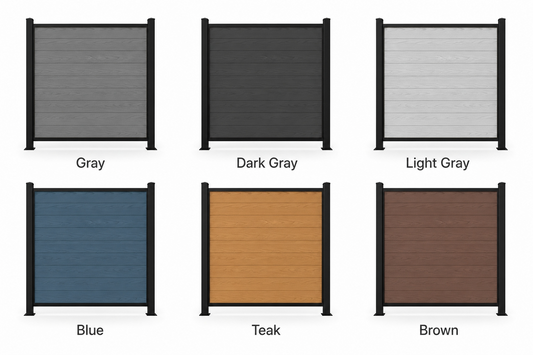
Bohaiwoods uses a mineral-loaded co-extrusion process with a halogen-free APP intumescent package in our Class A cladding line. The result tested at FSI 20 and SDI 380 under ASTM E84 at an SGS-accredited lab, with the report covering the eight production colors as a single SKU group.
Class A WPC Cladding: Manufacturer Comparison
The Class A composite cladding market is narrower than the marketing suggests. Most UK-popular brands sell Class B, C, or even D products in the US. The table below compares published fire ratings for cladding lines (decking ratings are different) as of Q1 2026.
| Manufacturer | Origin | ASTM E84 Class | NFPA 285 Listing | Typical MOQ | Indicative Price/Panel |
|---|---|---|---|---|---|
| Bohaiwoods | China (direct factory) | Class A (FSI 20, SDI 380) | Available on request | 200 panels | $58–$72 |
| Trex Cladding | USA | Class A (select lines) | Limited assemblies | Distributor only | $95–$140 |
| NeoTimber Cladding | UK import | Class C (Classic), Class D (Deluxe) | Not listed | Distributor only | $80–$110 |
| Millboard Envello | UK | Class B (Euroclass B-s2,d0) | Not listed | Distributor only | $120–$180 |
| Fiberon Wildwood | USA | Class B | Not listed | Distributor only | $90–$130 |
| Vocana | China | Class A (claimed) | Not listed | 500 panels | $50–$65 |
A few patterns are worth flagging. Direct-from-factory Chinese suppliers undercut US distributors by 35–50% on per-panel cost. Many premium brands do not actually carry Class A on their cladding range despite Class A decking lines under the same brand. NFPA 285 assembly listings remain rare across the entire composite cladding category — get this confirmed in writing before specifying for a building over 40 feet.
<a id="spec-checklist"></a>
Spec Section 074640 Checklist
CSI MasterFormat Section 07 46 40 covers fiber cement and composite siding. For a Class A WPC cladding spec, the language below produces submittals the AHJ will accept on the first pass.
Under Part 1.04 Submittals, require: ASTM E84 test report from an accredited lab (UL, Intertek, SGS, NGC) covering the exact color and thickness being supplied; NFPA 285 assembly listing if the building is over 40 feet; ASTM D7032 product certification covering structural and durability properties; ASTM G155 weathering data showing color retention under UV exposure; manufacturer warranty of minimum 15 years on structural integrity and 10 years on color.
Under Part 2.02 Materials, specify mineral content as a percentage by weight (target 55–65% for Class A WPC), call out the polymer (HDPE preferred for façade) and outer cap (ASA preferred for UV stability), and lock in panel dimensions to within ±1.0 mm to control field cutting waste.
Under Part 3.03 Installation, reference the manufacturer's NFPA 285-listed assembly drawing and prohibit field substitutions of WRB, insulation, or fastener type. This single clause prevents the contractor from value-engineering the assembly into a non-compliant configuration.
<a id="common-mistakes"></a>
Five Mistakes Architects Make on Fire-Rated Façades
After reviewing several hundred submittal packages, the same errors keep surfacing.
First, treating "Class A" as universal. A Class A flame spread index does not equal NFPA 285 compliance on a tall building, and it does not equal WUI compliance in a California fire zone. Each test answers a different question.
Second, accepting test reports for the wrong SKU. A Class A test on a 16 mm panel does not carry over to a 12 mm panel from the same supplier — and color variations can shift FSI by 5–10 points. Demand reports that match the actual panel being shipped.
Third, ignoring the assembly. A Class A panel installed over a combustible foam insulation with a polyethylene WRB can fail NFPA 285. The assembly is the unit of compliance above 40 feet.
Fourth, omitting smoke development from the spec. SDI 450 is the Class A ceiling, but materials can be Class A on FSI and still produce dense smoke. Spell out the SDI cap if smoke is a life safety concern (egress routes, atria).
Fifth, skipping field verification. Class A certification covers what was tested, not what arrived on site. Pull a random panel and request a third-party retest on high-rise jobs — a 0.3% cost line item that has caught more than one substituted shipment.
<a id="cost-comparison"></a>
Cost: Class A vs Class B vs Class C Cladding
Fire performance has a real cost premium because the formulation cost scales with mineral and additive loading. Below is the rough delta in landed US distributor pricing for WPC cladding at typical 16 mm thickness and 200 mm width.
Class C WPC cladding from a Chinese factory lands around $32–$45 per panel before duties. Class B raises that to roughly $48–$60. Class A lands at $58–$80 depending on the additive package — halogen-free intumescent formulations cost more than brominated equivalents but avoid REACH and TSCA exposure.
Add Section 301 tariffs (currently 25% on most WPC products under HS 3925.90 imported to the US from China), ocean freight at roughly $0.30–$0.50 per panel from Qingdao or Tianjin to the US East Coast, and customs brokerage. Factory-direct Class A cladding still typically lands 30–45% below US-distributor pricing for equivalent fire performance.
For a typical 50,000 ft² mid-rise façade project, the Class A premium over Class B at the factory gate is around $24,000 — a rounding error against typical NFPA 285 assembly testing costs of $80,000+ if a custom assembly needs validating.
<a id="sourcing-china"></a>
Sourcing Class A Cladding from China
Chinese WPC manufacturing capacity dwarfs the rest of the world combined — Shandong province alone runs more than 1,200 extrusion lines. The challenge is not finding a factory; it is finding one that can document Class A performance and produce panels consistent enough that the field-shipped product matches the lab-tested product.
A short sourcing checklist that screens out the bottom 80% of factories: ASTM E84 report from an internationally accredited lab (SGS, Intertek, TÜV, UL) issued within the last 24 months; written confirmation that the report covers the specific color you are ordering; SGS or BV factory inspection report covering production line audit and capacity verification; sample shipment of 5+ panels for independent retest before the production run; a tooling deposit structure that lets you abandon if the pilot panels fail QC.
Bohaiwoods runs 50+ production lines, ships to 80+ countries, and prices Class A fluted cladding from $58 per panel with free samples on request. Every Class A SKU ships with the matching SGS-issued ASTM E84 report and ASTM D7032 certification covering structural performance.
FAQ
1. Is Class A fire rated composite cladding required for all commercial buildings in the US? No. The IBC requires Class A in specific contexts — egress routes, exit enclosures, certain occupancy groups, and exterior walls of tall buildings with combustible components. Many low-rise commercial projects accept Class B cladding. Always confirm with the local AHJ before specifying.
2. What is the difference between Class A under ASTM E84 and Euroclass B under EN 13501-1? The standards use different test methods and metrics. Euroclass B-s2,d0 is roughly comparable to ASTM E84 Class A on flame spread, but the smoke and droplet sub-classifications add detail that ASTM E84 does not capture. They are not interchangeable for code compliance.
3. Do I need NFPA 285 if my cladding is Class A? For buildings under 40 feet, usually no. For Type I-IV buildings over 40 feet with combustible cladding, foam plastic insulation, or combustible WRBs, IBC Section 1403.5 requires NFPA 285 compliance regardless of the cladding's E84 rating.
4. What is the MOQ for Class A composite cladding from Bohaiwoods? Starting MOQ is 200 panels (~480 m² depending on profile). Custom colors typically require 1,000+ panels per color. Free samples ship within 7 business days to US destinations.
5. What is the lead time on Class A cladding orders to the US? Production averages 18–25 days after deposit. Ocean freight to US East Coast averages 30–35 days, West Coast 18–22 days. Total door-to-door is typically 7–9 weeks.
6. How does Section 301 tariff affect Class A WPC pricing? Most WPC cladding classifies under HS 3925.90.00 and carries a 25% Section 301 tariff for goods of Chinese origin, plus a 5.3% MFN duty. Factor roughly 30% above the FOB price for landed cost before brokerage and inland freight.
7. What warranty does Bohaiwoods provide on Class A cladding? Standard warranty is 25 years on structural integrity, 15 years on color retention, and 10 years on fire performance. Project-specific warranty endorsements are available for documented assemblies over 10,000 m².
8. Can the Class A formulation handle freeze-thaw cycles in Northern climates? Yes. The mineral-loaded formulation has been tested to ASTM C666 freeze-thaw durability and ASTM G155 UV weathering covering 4,000 hours. Bohaiwoods Class A cladding has installations in Toronto, Boston, and Stockholm-equivalent climates with no field failures reported in 8+ years.
9. Do you provide CAD details for Class A cladding installation? Yes — 2D DWG and 3D Revit families are available for our standard profiles, including the NFPA 285-aligned wall assemblies. Request via +4407529784873
10. Can I get a custom color on Class A material? Yes, with caveats. Custom colors require a new ASTM E84 test if you need a documented Class A rating on that specific shade. Test cost is approximately $4,500 USD and adds 4–6 weeks. Standard colors come pre-tested.
Specify Class A With Confidence — Get a Sample and a Project Quote
If your next mid-rise or commercial project needs Class A fire rated composite cladding with documented ASTM E84 and NFPA 285 backup, start with a sample box. Bohaiwoods ships free 8-color sample sets to architects and developers across the US, with the matching test reports included.
Browse the co-extrusion fluted cladding line for the Class A SKUs most US specifiers choose. For pricing on container-scale orders, the WPC cladding wholesale program lays out volume tiers, MOQs, and lead times. US-based projects can also visit the USA market landing page for tariff guidance, freight options, and case studies from completed commercial installations.
Free samples, full test reports, and a project-specific quote arrive within 48 hours of inquiry.
Tags:
Previous
How to Source WPC Cladding from China: 2026 Buyer's Checklist
Next
WPC vs PVC vs Aluminum Cladding: An Engineering Comparison for Commercial Projects (2026)