Fencing Solutions Under the California Sun: How WPC Fencing Resists UV Damage and Fading

California living is synonymous with sunshine. We love our bright, sunny days, but that same relentless sun is the number one enemy of our homes' exteriors. For homeowners, one of the biggest frustrations is investing in a beautiful new fence, only to watch it fade, crack, and deteriorate under the harsh UV rays.
Traditional fencing materials just can't keep up.
-
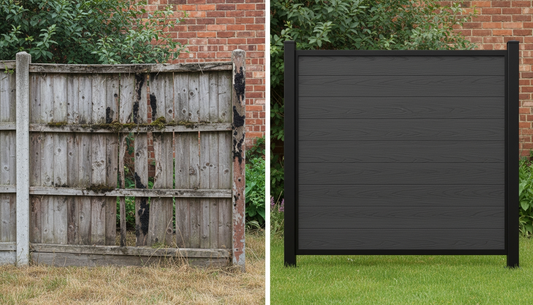
Wood fences (even expensive redwood or cedar) inevitably turn a blotchy, silver-gray. The sun breaks down their natural lignins, leading to splitting, warping, and the constant, costly cycle of sanding and re-staining.
-
Traditional vinyl (PVC) fences aren't much better. Cheaper vinyl yellows and, more commonly, suffers from "chalking" — a process where the UV rays break down the surface, leaving a powdery, faded finish that looks cheap and worn out.

This is where the maintenance-free lifestyle that Californians demand clashes with reality. But what if there was a solution built specifically to withstand this solar assault?
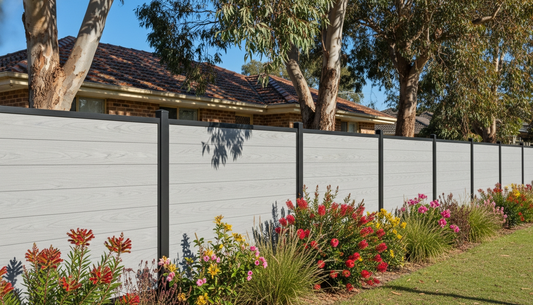
Enter WPC (Wood-Plastic Composite) Fencing. This next-generation material provides the warmth and beauty of wood without any of its weaknesses. It is engineered from the ground up to be a fade-resistant, durable, and low-maintenance fencing solution for the Golden State.
☀️ The UV Gauntlet: Why Traditional Fences Fail
To appreciate the WPC solution, you first have to understand the enemy: Ultraviolet (UV) radiation.
UV rays are relentless. They chemically attack the surface of materials, breaking down the bonds that hold them together and give them colour.
-
On wood: UV radiation destroys lignin, the "glue" that holds wood fibres together. This is what causes the greying effect and structural weakness.

-
On vinyl: UV rays break down the titanium dioxide (TiO2), which is used as a pigment and UV blocker. This breakdown releases a chalky powder and causes the plastic to become brittle and discoloured.
In a high-exposure state like California, this degradation process happens years faster than in other climates.
🚀 The WPC Revolution: Engineered to Defeat the Sun
WPC, or Wood-Plastic Composite, is a hybrid material made from a blend of recycled wood fibres and high-density plastics. But not all WPC is created equal. Our WPC fencing's UV resistance comes from two technological advantages.
Advantage 1: Advanced UV Stabilizers (Protection from the Inside)
Unlike a simple coat of paint, our WPC fencing is protected from its very core. During the manufacturing process, UV stabilizers and antioxidants are blended directly into the composite material.

This core protection means:
-
Colour is locked in: the pigments are protected at a molecular level, which slows the bleaching that strips colour from an unprotected surface.
-
No chalking: the plastic components are stabilised, so they do not break down into a powdery surface.
Myth vs fact
Myth: "Composite fencing never fades."
Fact: all outdoor materials go through a slight, one-time weathering in the first few months as they acclimatise. On a quality capped board that change is minimal, uniform and then stable — which is a different thing from the drastic, continuous, blotchy fading of wood. Any supplier claiming zero change is overstating it.
Advantage 2: Co-Extrusion (Capped) Technology

Our premium WPC fencing uses co-extrusion, also known as capped composite. The WPC core is surrounded by a non-porous polymer shell — armour for the board.
That shell delivers:
-
A UV barrier: the shell takes the UV exposure instead of the composite core, which is where the colour lives.
-
Stain and mould resistance: the non-porous surface means spills (wine, BBQ grease) and moisture cannot penetrate, which also denies mould and mildew a foothold.
-
Scratch and impact resistance: a harder surface that stands up better to pets, patio furniture and yard work. No composite board is scratch-proof — dragging metal furniture will mark any surface.
For a California homeowner, that capped shell is the difference between a fence that still looks right in year eight and one that does not — with nothing more than a rinse from a hose.
Why WPC Suits California
When you compare long-term performance and cost, the choice gets clearer.
| Feature | Traditional wood (cedar/redwood) | Standard vinyl (PVC) | Co-extruded WPC fencing |
| UV & fade resistance | Poor (greys and fades quickly) | Fair (prone to chalking and yellowing) | Excellent (colour held under the cap) |
| Maintenance | Very high (annual staining, sealing) | Low (needs frequent cleaning) | Virtually zero (rinse with a hose) |
| Durability | Poor (splits, warps, rots, termites) | Fair (can crack, becomes brittle) | Excellent (no rot, no warping, termite-proof) |
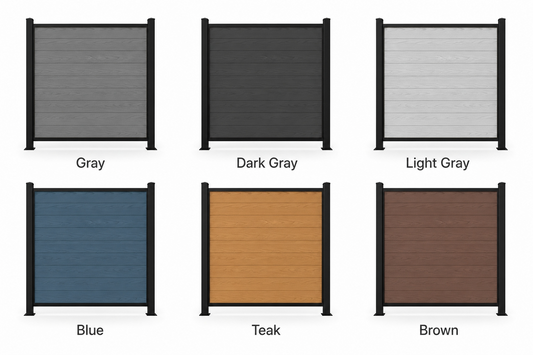
| Aesthetics | Excellent (natural) | Fair (reads as plastic) | Excellent (rich colours, realistic wood grain) |
| Eco-credentials | Fair (requires new lumber) | Poor (petroleum-based) | Good (60% recycled wood fibre, 40% recycled HDPE) |
Common California Fencing Questions
-
Looking for a low-maintenance fence for Southern California? You get the look of a wood fence in Los Angeles or San Diego without hiring a painter again.
-
Need a termite-proof fence for the Bay Area? The WPC composite core is immune to termites, dry rot and moisture — major issues in many parts of California.
-
Worried about fence lifespan in extreme heat, in Sacramento or Palm Springs? WPC is engineered for thermal stability and will not warp or crack the way wood and vinyl do through high-heat cycles.
-
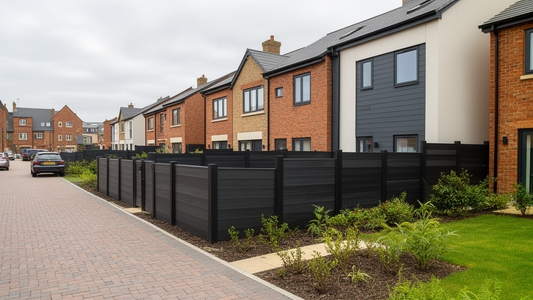
Want a modern horizontal privacy fence that stays looking new? WPC suits contemporary designs, and the co-extrusion cap is what keeps those clean lines from greying out.
Your First Fence Should Be Your Last
In California, your fence should not be another line on the annual maintenance list. It should be a one-time investment in privacy, appearance and property value.
Stop budgeting for stain, paint and repairs. Choosing WPC fencing with UV stabilizers and co-extrusion technology buys you weekends spent enjoying the yard rather than working on it.
Ready to stop the fade? Request a WPC fencing sample using the form on this page. Samples themselves are free — you cover the courier charge, and we credit it against your first order.
Tags:
Previous
7 Hidden Dangers in Wood–Plastic Composite Manufacturing
Next
Case Study: Solving Brittleness and Warping of Composite Decking in Canada’s Extreme Cold