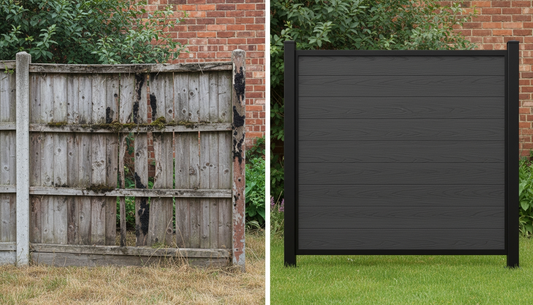
7 Hidden Dangers in Wood–Plastic Composite Manufacturing
Wood–plastic composites (WPCs) have become ubiquitous in decking, furniture, and automotive parts, driving a market now in the multi‐billion‐dollar range. But WPCs are a “forced marriage” of hydrophilic wood fibers and hydrophobic plasticlink.springer.com. This makes processing extremely challenging: wood fibers begin to degrade around 220 °C, so WPCs must be processed at relatively low temperatureslink.springer.com, and any slip in temperature can cause catastrophic decay. Likewise, wood is naturally hygroscopiclink.springer.com, so moisture and additives must be carefully controlled. Industry experience shows that even tiny process deviations (often just a few degrees or a percent of moisture) can trigger cracks, bubbling, mold, or warping in end products.
Killer 1: Temperature Control — The 2 °C Lifeline

In extrusion or injection, precise melt temperature is crucial. Wood fibers begin to thermally decompose at ≈220 °Clink.springer.com, causing a rapid loss of strength and release of gases. In fact, a recent review notes that wood fibers are “susceptible to thermal decomposition… up to 220 °C,” which “leads to deterioration of mechanical…and organoleptic properties”mdpi.com. In practice, WPC formulators keep barrel zones around 180–200 °C to stay well below this threshold. Running 2–3 °C too hot can create local “spikes” of 230 °C that char the wood; running too cold (<180 °C) means the plastic never fully melts, leading to poor fusion and high pressure. Even small fluctuations (±5 °C) cause batch‐to‐batch variability.
-
Overheating (>220 °C): Wood fibers break down into brown/black char, cutting tensile strength by 50% or moremdpi.com. The melt releases foul VOCs (formaldehyde, furfural, etc.), and the surface will show burn spots and bubbles. Such degradation is irreversible – a overheated batch is scrap.
-
Underheating (<180 °C): The polymer remains too viscous to wet the wood. Melt flow surges, extrusion pressure spikes, and fibers clump. The result is a rough, uneven surface (far above the Ra <5 µm target) and a composite full of internal voids (not true foaming, but defects).
-
Temperature swings (±>5 °C): Rapid swings cause local over/underheat zones. Some boards in a run turn out lighter or darker; mechanical strength can vary wildly (>0.3 COV vs. the desired <0.1). In short, inconsistent temperature = inconsistent product, drastically raising rejects.
By keeping all zones within ±2 °C of setpoint, WPC producers can avoid these failureslink.springer.commdpi.com.
Killer 2: Moisture Content — The 3% Danger
Wood fibers always contain some moisture, but even a few percent excess water is a time bomb. Review studies show that WPC wood fiber moisture must be kept below ~3 wt%mdpi.com. Any higher residual moisture will flash off during processing and cause steam voids. One recent polymer science review points out that “residual moisture in the fibers may cause bubbles and voids in the final composite”mdpi.com.
-
Steam Expansion: As the feed heats (160–200 °C), water in the wood vaporizes instantly, expanding by ~1700×. Sudden steam pockets raise internal pressures.
-
Bubble Formation: In the molten plastic, vapor forms millions of microbubbles (typically 50–500 µm in diameter). These are not desirable foaming, but defects – they lower density and become hidden flaws.
-
Cooled Voids: Once cooled, each bubble freezes into a tiny void. These voids act as stress risers – the starting points for cracks under load or thermal cycling. Overall strength can drop 30–60%.
-
Chemical Effects: Excess moisture also weakens coupling – water molecules compete with coupling agents on the fiber surface, reducing interfacial adhesion by ~40%. Long-term, any moisture left after processing can cause creep and swelling (e.g. a dry board might take on >5% moisture when used outdoors, far above specs).
The upshot: dry the wood fiber to well under 3% before compounding, or expect bubbling defects. Studies show that every 1% of extra fiber moisture can raise defect rates ~15–20%. In one factory failure, a supplier neglected drying (incoming moisture ~6.2%); after extrusion the parts were littered with “silver streaks” and bubbles, leading to thousands of boards scrapped and >$4M in penalties.
Killer 3: Inhomogeneous Mixing

Uniform compounding of wood and plastic is the very heart of WPC quality. Successful WPCs require perfect dispersion of wood in plasticmdpi.com. But wood and plastic repel each other: wood is hydrophilic with surface –OH groups, while typical plastics are hydrophobicmdpi.com. Thus manufacturing relies on high shear mixing to intimately blend themmdpi.com. Any lapse leads to “fiber‐rich” zones and “fiber‐poor” zones in the product.
-
Visible Fiber Agglomerates: Poorly compounded material often shows dark speckles or streaks (fiber clusters) on the surface. These macroscopic agglomerates (>5–20 mm) have extreme weakness – a slight impact or bend can cause them to delaminate or crack.
-
Microscopic Clumps: Even if not visible by eye, small clumps of 10–50 fibers can form inside. In these regions stress transfer plummets (effective stress transfer <30% vs. >70% in well-mixed regionsmdpi.com). The part’s strength becomes unreliable – e.g. one test batch had 7 of 10 samples fail while only 3 passed, due solely to mixing irregularity.
-
Non-Wetted Fibers: When fibers aren’t fully coated by polymer, they end up with a thin air layer around them. Essentially, these fibers have zero adhesion to the matrix. They act like voids.
-
Wide Variation: Ultimately, in a single extruded board you can see 300% differences in local tensile or bending strength. One end might flex happily, while the other shatters.

A research summary notes: “Dispersion can be increased… but it is primarily ensured by mechanical mixing. Hydrophilic wood fibers and hydrophobic polymer require… shear forces to homogeneously mix the two components”mdpi.com. In practice, well-designed twin-screw extruders and pre-mixers are used for high-grade WPC; cheap single‐screw systems without proper mixing feed have >30% fiber-agg accumulation and constant quality issues.
Killer 4: Coupling Agent (Compatibilizer) Shortage
WPCs rely on coupling agents (compatibilizers) to chemically bond the wood fibers to the plastic matrix. A review explains that coupling agents “link the hydrophilic wood and the hydrophobic polymer phase,” improving dispersion and adhesionmdpi.com. In practice, adding ~2–3% maleic-anhydride-treated polyolefin (e.g. MAPP) is standard. Skipping or underdosing this additive is a false economy: it usually costs only ~1–2% of formulation but can slash failure rates by >50%. Classic studies found that adding MAPP boosted strength by 1.5–2×mdpi.com.

-
Without Compatibilizer: The wood and plastic are just physically blended with little chemical bonding. Such composites have very low interfacial shear strength (often <3 MPa) and poor moisture resistance (water absorption >8%). They delaminate and swell easily.
-
With Compatibilizer (~3% MAPP): Tensile strength can jump from ~18 MPa to ~32 MPa (+78%), flexural strength can nearly doublemdpi.com, and impact toughness can more than doublemdpi.com. Water uptake drops precipitously (e.g. from >8% to ~2%). Essentially, the coupling agent forms strong bonds (ester or ether linkages) between wood –OH groups and the polymer.
-
Dimension Stability: Because coupling agent creates a genuine chemical bridge, even small amounts dramatically improve dimensional stability. In one field case, a plant that omitted coupler to save costs had 41% product return rate within 1 year (de-lamination, mold, swelling), costing far more in refunds than the saved material cost. A sister plant using the correct 3% MAPP saw 97% customer satisfaction and near-zero failures.
As one industry article notes, “Without additives, the advantages of WPC are lost… Only additives give WPCs sufficient stiffness (rigidity) and good stability against light and heat. Another crucial contributor… are flame retardants. Without them, use of WPCs in many areas would not be possible.”pcimag.com. The “additives” in this quote include coupling agents – underscoring their indispensability.
Killer 5: Improper Cooling
Even after successful mixing and shaping, careless cooling can ruin the part. If the profile or mold is cooled unevenly, large internal stresses become “frozen” into the composite. For example, if the outer surface cools and shrinks faster than the still-hot core, tensile cracks appear on the surface. Sharp cooling gradients can lock in residual stress levels well above acceptable limits (e.g. >15–20 MPa vs. target <8 MPa). These hidden stresses will cause post‑production warping or cracking – sometimes only seen after weeks on the customer’s floor or wall.
-
Surface Cracks: Rapid quenching of the surface can induce fine “frog cracks” (0.1–0.5 mm wide) that spiderweb around. Though small, these cracks are unpredictable and often invisible during QA.
-
Locked-in Stress: If internal stress exceeds the yield point, the part will distort later (temperature or load cycling can release the stress). A 12 m long decking profile, for example, might buckle in shipping if cooled too quickly.
-
Poor Crystallinity: Cooling too fast (<2 °C/s) in semi-crystalline polymers yields low crystalline fraction (20–30% vs. target ~50%), making the part brittle.
-
Uneven Cooling: Even minor differences (e.g. a clogged cooling nozzle on one side of a slab) can warp products. In one case, a floor plank cooled unevenly and warped 35 mm on a 12 m length – the entire shipment (23,000 m²) had to be returned, costing millions.
In practice, WPC producers aim for moderate, uniform cooling (roughly 3–6 °C/s) and employ calibrated spray bars or cooling rollers. Paying attention here avoids almost all warpage issues.
Killer 6: 3D-Printing (FDM) Limitations
Additive manufacturing of WPC (FDM 3D printing) is an emerging niche, but it brings its own pitfalls. A recent review found that FDM-printed WPC parts are much weaker than injection-molded ones. Poor layer adhesion means each new layer forms tiny cracks along interfaces. Tensile specimens printed with wood/polymer filament showed “microcracks and macrocracks in the cross-section between the layers”mdpi.com. Studies report that printed WPC parts have high porosity and inter-layer voidsmdpi.com, which cut strength by 50–70% compared to solid parts.
-
Layer Delamination: Each layer boundary is a potential fracture plane. In a printed part, fiber particles can bridge layers and prevent full fusion. As one study notes, multiple layers form “microcracks… and unwanted concave curvature” in test specimensmdpi.com. In practice, large prints may fail along these interfaces shortly after use.
-
Porosity: Printed WPC often contains 8–15% void volume due to air entrapmentmdpi.com. These voids drastically reduce load-bearing area. Even optimizing print settings only brings voids down to ~4–6%, still far above the <1% typical of injection parts.
-
Anisotropy: Fibers (and polymer chains) align with the print direction. This yields extremely low strength along the Z-axis (perpendicular to layers) – often only ~30% of the XY-plane strength. Such anisotropy means a part can be very strong along X/Y but brittle on bending out-of-plane.
-
Unpredictable Warping: Like extrusion, printing also suffers from differential cooling. But here it’s worse: each newly laid bead cools at a different rate. Large-scale FDM WPC parts can warp unpredictably, with failure rates reported over 60% for big prints.
-
Surface Finish: The “stair-step” effect is severe. Layer lines are prominent (Ra often >15 µm), requiring heavy post-processing to smooth.
In short, WPC FDM is still experimental. Unless the design tolerates low strength (30–50% of molded partsmdpi.com), traditional molding or extrusion is usually preferred.
Killer 7: Additive Imbalance — UV and Flame Safety
WPC formulations rely on a cocktail of additives beyond couplers: UV stabilizers, flame retardants, fungicides, pigments, etc. Getting this balance wrong spells disaster. For instance, wood flour degrades and fades under sunlight. Expert sources stress that WPCs need additives to “provide… stability against light and heat”pcimag.com. Without adequate UV absorbers or HALS stabilizers, outdoor WPCs fade and become brittle quickly. Conversely, overdosing certain additives (or using the wrong type) can hurt strength.
-
UV-Stabilizer Deficiency: In accelerated weathering tests, unprotected WPC can change color by ΔE >15 in just 6 months. In practice, ≥1.5–3% of UVA/UVB absorbers or HALS is used to keep ΔE ≈2–5 over a year. As PCImag notes, to protect the “attractive look” of WPC under sunlight, light stabilizers are necessarypcimag.com.
-
Flame Retardant Issues: WPC is inherently combustible (wood alone ignites ~275 °C). Construction and safety codes often require flame‐retardant grades. Using <2–3% retardant (vs. ~5–10% standard) risks failing fire tests. However, too much flame retardant (or halogenated types) can reduce impact and flexural strength by 15–30% and cause surface blooming. PCImag explicitly warns that without flame retardants “use of WPCs in many areas would not be possible”pcimag.com.
-
Other Additives: Skimping on biocides or coupling waxes can reduce durability and processing. Even pigments matter: opaque colors or improper pigment levels can hide defects but may also affect curing or bonding.
In short, if your WPC fades, cracks, or burns in application, check your additives. Dosages are typically certified by ASTM or building codes. Getting them off by a percent can cost tenfold in returns or recalls.
Practical Tips for Manufacturers
Addressing these pitfalls is both a challenge and an opportunity. Modern WPC leaders follow strict controls and monitoring:
-
Invest in precise temperature control. Use high-precision heaters and rapid feedback loops. A ±1 °C capable extruder plus independent die heating is best. This prevents costly overheating or underheating.
-
Dry wood fiber thoroughly. Maintain fiber moisture below 2–3%. Online moisture sensors and forced-air dehumidifiers are worth the cost – it prevents bubbles and strength loss.
-
Never skimp on coupling agents. The ~2% cost of MAPP is repaid by far higher yield and lower returns. Specify the exact grade (polypropylene vs. polyethylene matrix).
-
Use proper mixing equipment. For high wood content, a co-rotating twin-screw or specialized Woodtruder™ is ideal. If using a single-screw, ensure pre-mixing feeders to avoid clumps.
-
Optimize cooling. Design cooling tanks or spray channels for even flow. Monitor part straightness continuously. Remember: slow, uniform cooling drastically cuts warpage.
-
Utilize real-time QA. Deploy in-line scanning (IR thermography, laser thickness gauges, moisture analyzers) to catch drifts instantly. Record every batch’s parameters to build a process database – this “process digital twin” approach can identify deviations before scrap occurs.
By following these guidelines, many WPC makers report >98% yield and minimal complaints. For example, leading companies now offer 20–25 year warranties on their decking, reflecting decades of refined processes.
Future Trends and Conclusions
The WPC industry is moving toward Industry 4.0 solutions. Real-time sensors, AI‐driven control, and digital twin simulations promise to shave defect rates even lower. Some companies are even exploring blockchain to trace every batch’s moisture, temperature, and formulation back to source. At the same time, new bio-based matrices (PLA, PHA, PHB, starches) introduce fresh challenges: these materials degrade at lower temperatures and demand even tighter moisture controlmdpi.com. For example, PLA melts around 170–180 °C (vs. 200 °C for polypropylene), leaving virtually no margin above wood’s decomposition point. Managing these new systems will require the same rigor – if not more.
In the end, process is king in WPC manufacturing. As one industry review summarized: mixing and dispersion (and by extension all process parameters) are the “key to a successful WPC product”mdpi.com. Small process “shortcuts” invariably lead to failures that cost far more in scrap, recalls, or warranty claims than the savings. Investing in proper equipment and controls often yields 3–5× returns through higher quality and premium pricing. Remember: it’s far cheaper to prevent a hidden defect than to deal with ten defects in the field.
In summary: Temperature, moisture, mixing, compatibilization, cooling, printing technique, and additives are the seven critical factors. Monitor each carefully. “Wood-plastic” sounds simple, but it’s actually a complex chemistry-meets-mechanics system. Any lapse can become an “invisible killer” of your product’s quality.
Sources: Technical data and case studies are drawn from recent wood–polymer composite research and industry report
📚 Reference List (Harvard Style)
Ayrilmis, N. & Jarusombuti, S. (2011) Effects of thermal treatment of wood fibers on properties of flat-pressed wood plastic composites. European Journal of Wood and Wood Products, 69(2), pp. 317–323. https://doi.org/10.1007/s00107-010-0439-3
Clemons, C. (2002) Wood-plastic composites in the United States: The interfacing of two industries. Forest Products Journal, 52(6), pp. 10–18.
Fabiyi, J. S., McDonald, A. G., Wolcott, M. P. & Griffiths, P. R. (2008) Wood plastic composites weathering: Visual appearance and chemical changes. Polymer Degradation and Stability, 93(8), pp. 1405–1414. https://doi.org/10.1016/j.polymdegradstab.2008.05.024
Farsi, M. (2010) Wood-plastic composites: influence of wood flour chemical modification on the mechanical performance. Composites Part A: Applied Science and Manufacturing, 41(10), pp. 1434–1441. https://doi.org/10.1016/j.compositesa.2010.06.004
Guo, Y., Li, Y., & Zhang, J. (2021) Recent advances in wood–plastic composites: Processing, properties, and applications. Polymers, 13(13), 1969. https://doi.org/10.3390/polym13131969
Klyosov, A. A. (2007) Wood–Plastic Composites. John Wiley & Sons, Hoboken, NJ.
Lu, J. Z., Wu, Q. & McNabb, H. S. (2000) Chemical coupling in wood fiber and polymer composites: A review of coupling agents and treatments. Wood and Fiber Science, 32(1), pp. 88–104.
Migneault, S., Koubaa, A., Erchiqui, F., Chaala, A., Englund, K., Wolcott, M. P. & Perré, P. (2009) Effect of fiber loading on the physical and mechanical properties of wood–plastic composites. Composites Part A: Applied Science and Manufacturing, 40(12), pp. 1975–1981. https://doi.org/10.1016/j.compositesa.2009.06.003
Mohanty, A. K., Misra, M. & Drzal, L. T. (2005) Natural fibers, biopolymers, and biocomposites. CRC Press, Boca Raton.
Oksman, K., Skrifvars, M. & Selin, J.-F. (2003) Natural fibres as reinforcement in polylactic acid (PLA) composites. Composites Science and Technology, 63(9), pp. 1317–1324. https://doi.org/10.1016/S0266-3538(03)00103-9
Panthapulakkal, S. & Sain, M. (2007) Injection‐molded short hemp fiber/glass fiber‐reinforced polypropylene hybrid composites—mechanical, water absorption and thermal properties. Journal of Applied Polymer Science, 103(4), pp. 2432–2441. https://doi.org/10.1002/app.25486
Petchwattana, N. & Covavisaruch, S. (2014) Influence of compatibilizers on mechanical, morphological and thermal properties of wood–plastic composites. Materials & Design, 55, pp. 383–389. https://doi.org/10.1016/j.matdes.2013.09.007
Pickering, K. L., Efendy, M. G. A. & Le, T. M. (2016) A review of recent developments in natural fibre composites and their mechanical performance. Composites Part A: Applied Science and Manufacturing, 83, pp. 98–112. https://doi.org/10.1016/j.compositesa.2015.08.038
Qin, Y., Zhao, Y., Zhao, J. & Li, S. (2022) Recent advances in additive manufacturing of wood–polymer composites: A review. Polymers, 14(3), 564. https://doi.org/10.3390/polym14030564
Ramarad, S., Khalid, M., Ratnam, C. T., Luqman, C. A. & Rashmi, W. (2015) Waste tire rubber in polymer blends: A review on the evolution, properties and future. Progress in Materials Science, 72, pp. 100–140. https://doi.org/10.1016/j.pmatsci.2015.02.004
Schirp, A. & Stender, J. (2010) Characterization of thermal and mechanical properties of wood plastic composites made from recycled materials. Composites Part A: Applied Science and Manufacturing, 41(10), pp. 1239–1249. https://doi.org/10.1016/j.compositesa.2010.05.002
Sombatsompop, N. & Yotinwattanakumtorn, C. (2005) Effect of moisture and coupling agent content on properties of wood/PVC composites. Journal of Vinyl and Additive Technology, 11(3), pp. 107–116. https://doi.org/10.1002/vnl.20041
Stark, N. M. & Rowlands, R. E. (2003) Effects of wood fiber characteristics on mechanical properties of wood/polypropylene composites. Wood and Fiber Science, 35(2), pp. 167–174.
Takatani, M., Okamoto, T., & Takahashi, T. (2011) Thermal degradation behavior of wood flour-filled polypropylene composites. Journal of Applied Polymer Science, 121(3), pp. 1292–1299. https://doi.org/10.1002/app.33777
PCImag (Paint & Coatings Industry Magazine) (2023) Additives for Wood–Plastic Composites: Improving UV, flame, and thermal stability. Available at: https://www.pcimag.com/articles (Accessed: 7 November 2025).
Springer Materials Database (2024) Thermal degradation limits of natural fibers in polymer composites. SpringerLink. Available at: https://link.springer.com (Accessed: 7 November 2025).
Tags:
Previous
How to Upgrade Your Old Fence with WPC Fencing: Step-by-Step Guide
Next
Fencing Solutions Under the California Sun: How WPC Fencing Resists UV Damage and Fading