The New Standard for Outdoor Spaces — Co-Extrusion WPC Composite Decking in 2026
The global WPC composite decking market is on a 12% annual growth trajectory, projected to exceed $18.9 billion by 2033. Homeowners, architects, and commercial developers are abandoning traditional timber at an unprecedented rate — not because wood has lost its beauty, but because modern co-extrusion WPC composite materials have mastered it while eliminating every weakness. Here is everything you need to know about the materials and technologies redefining outdoor living this year.
In this article
What Exactly Is Co-Extrusion WPC Composite Decking?
Wood-Plastic Composite (WPC) is a category of engineered outdoor building material formed by blending recycled wood fibers (typically 55–65%) with thermoplastic polymers such as high-density polyethylene (HDPE) and a targeted package of performance additives including UV stabilizers, fire retardants, and binding agents.
Co-extrusion is the technological leap that separates today's premium WPC from first-generation boards. Rather than producing a homogeneous composite profile, co-extrusion WPC uses a dual-layer manufacturing process: a robust timber-fiber core is simultaneously encapsulated by a high-performance polymer shell — typically ASA (Acrylic Styrene Acrylonitrile) or HDPE — during a single continuous extrusion pass. The result is a molecular-level bond between core and cap that prevents delamination, moisture ingress, and the surface fading that plagued earlier composite decking products.
"Co-extrusion isn't just a manufacturing method — it's the reason composite decking can now credibly compete with natural hardwood in both appearance and longevity."
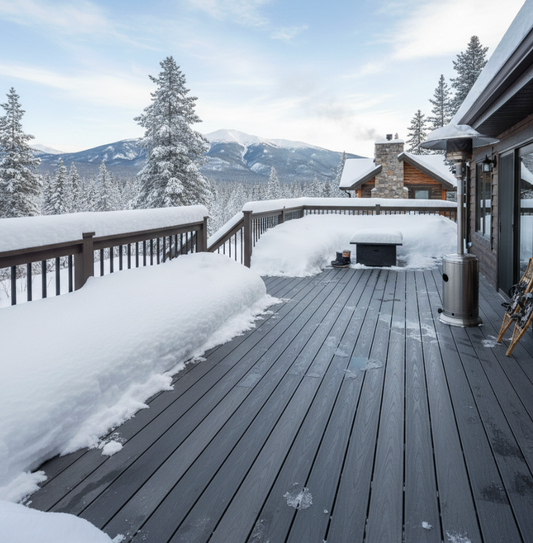
At BOHAI, our second-generation WPC decking boards feature precision-embossed 3D NatureGrain surfaces that replicate the texture of hand-scraped solid timber, combined with a 360° protective co-extruded shell that covers every face, edge, and groove channel. Slip resistance is engineered into the surface geometry itself — no added coatings required.
co-extrusion WPC decking HDPE composite boards 3D embossed WPC ASA capped composite low maintenance composite decking recycled composite materials
Why 2026 Is the Decisive Turning Point for WPC
Several converging forces are accelerating the global transition to composite outdoor building materials right now.
Regulatory pressure on timber harvesting
Tightening FSC certification requirements across Europe, North America, and Australia have made sustainably sourced hardwood significantly more expensive and harder to procure at scale. WPC composites, built largely from post-consumer recycled wood fibers and reclaimed plastic film, sidestep this supply constraint entirely while often qualifying as green building materials under LEED, BREEAM, and comparable rating schemes.
The outdoor living boom continues unabated
Consumer research consistently shows that outdoor living renovation is now the single fastest-growing home improvement category in the English-speaking world. Homeowners are investing in decks, pergolas, cladding upgrades, and garden rooms with the same intentionality they once reserved for kitchens and bathrooms. The demand for durable, design-forward, low-maintenance composite decking solutions has followed directly.
Manufacturing technology maturity
With over 50 high-throughput production lines and two decades of continuous R&D, Chinese WPC manufacturers like BOHAI have closed — and in many cases exceeded — the quality gap with premium Western brands, while maintaining the production cost advantages of scaled manufacturing. The current generation of products coming out of ISO-certified Chinese factories reflects genuine engineering excellence, not just price competition.
12% WPC market CAGR through 2031
$18.9B Projected market size by 2033
30+ Years expected lifespan vs 5–10 for timber
The Five Advantages That Are Converting the Industry
Zero-maintenance durability
No annual sealing, staining, or sanding. Co-extruded composite decking resists moisture, mold, UV fade, and insect damage without any surface treatments. A hosepipe rinse is genuinely sufficient.
Ecological responsibility
BOHAI composite products are manufactured from up to 95% recycled raw materials, diverting post-consumer wood waste and plastic film from landfill. End-of-life boards are themselves recyclable back into the production stream.
Exceptional longevity
While pressure-treated timber typically requires replacement within 10–15 years, quality co-extrusion WPC composite decking is warranted for 25–30 years. The lifecycle cost calculus decisively favours composite over a 20-year horizon.
Design versatility at scale
From chocolate coffee and teak-grain finishes to cool light grey modernism, WPC composite boards are available in a consistent, fade-stable palette across large volumes — impossible to guarantee with natural timber.
Splinter-free safety
The smooth yet textured composite surface eliminates the splintering and warping that make aging timber decks hazardous for children and elderly users. Anti-slip geometry is structural, not cosmetic.
Residential and commercial ready
The same product line serves poolside terraces, coastal hotel boardwalks, rooftop commercial terraces, and high-rise building facades. BOHAI composite cladding meets NFPA 285 commercial façade fire standards and ASHRAE condensation guidelines.
WPC Composite Decking vs. Traditional Timber: An Honest Comparison
The value proposition of composite decking over timber is strongest when evaluated over a realistic project lifespan rather than initial material cost alone. WPC typically carries a 20–30% higher upfront material cost than pressure-treated pine — but this gap inverts dramatically once maintenance, refinishing, and early replacement are factored in.
| Attribute | Co-Extrusion WPC Composite | Pressure-Treated Timber | Hardwood (Ipe/Teak) |
|---|---|---|---|
| Expected lifespan | 25–30 years | 10–15 years | 20–25 years (with maintenance) |
| Annual maintenance cost | Near zero | Moderate–high | High (oiling, sanding) |
| Rot / mold resistance | Excellent | Moderate | Good |
| Splinter-free | Yes | No | No (over time) |
| Colour consistency at scale | Guaranteed | Variable | Highly variable |
| Recyclable at end of life | Yes | No (treated chemicals) | Partially |
| 20-year total cost (per 100m²) | Lower | Highest | High |
BOHAI Generation 2 Co-Extrusion WPC Decking
Available in 5 colourways including Teak, Light Grey, Chocolate Coffee, Black, and Red. Full technical specifications, load tables, and installation guides available on request.
Beyond Decking: The Complete WPC Outdoor Ecosystem
One of the most significant shifts in the composite materials sector over the past three years is the emergence of fully integrated WPC outdoor product ecosystems. Rather than replacing a single deck, homeowners and developers are now specifying composite materials across every exterior surface — creating cohesive, zero-maintenance outdoor environments with a unified aesthetic language.
Composite cladding and wall panels
Composite cladding has become the material of choice for architects seeking the warmth of timber facade systems without the five-year refinishing cycle. BOHAI's composite cladding range features a HydroShield Pro™ surface with a water contact angle exceeding 110°, effectively making the board self-cleaning under normal rainfall. For commercial facades on buildings exceeding three storeys, our system is third-party certified to a three-hour fire barrier standard and complies with NFPA 285 commercial facade requirements.
The thermal performance is equally compelling: BOHAI's ThermaCoat™ low-emissivity surface treatment is independently tested to reduce building energy consumption by up to 23% versus untreated cladding — a meaningful contribution to BREEAM and LEED certification point targets.
WPC fencing systems
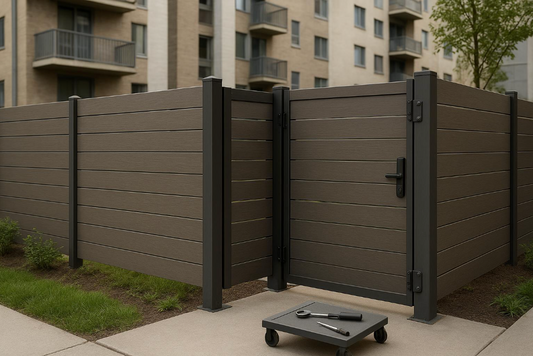
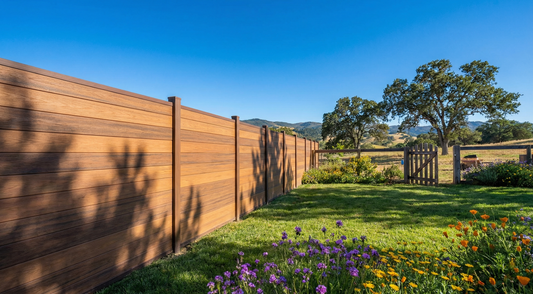
The global composite fencing market is growing in parallel with composite decking, driven by the same logic: WPC fencing eliminates painting, prevents rot and insect damage, and maintains its appearance for decades without intervention. BOHAI's co-extrusion composite fence panels are formulated with 60% high-quality wood fiber, 30% recycled HDPE, and 10% performance additives including UV stabilizers and fire-retardant compounds.
The wavy-panel design in our contemporary range isn't purely aesthetic: the undulating surface geometry improves acoustic absorption, reducing transmitted noise by a measurable margin in residential boundary fence applications — a feature that resonates strongly in urban garden settings.
Glulam engineered timber
For structural applications requiring long clear spans — sports halls, retail atriums, pedestrian bridges, canopied walkways — BOHAI's glulam (glued laminated timber) range provides an engineered wood solution certified to ISO standards. Custom camber specifications are available for roof beams requiring pre-deflection compensation, and sections up to 4m in length ship in standard containers with full technical documentation for structural engineers.
Spruce natural timber cladding
Recognising that some projects have a genuine architectural brief for natural timber, BOHAI also supplies a premium spruce cladding range — including loglap, shiplap, and tongue-and-groove profiles — in thermally modified and natural grades. Thermally treated spruce achieves dramatically improved dimensional stability and biological durability without chemical preservatives, developing a dignified silver-grey patina over time that many architects actively specify.
How to Choose the Right WPC Composite Manufacturer
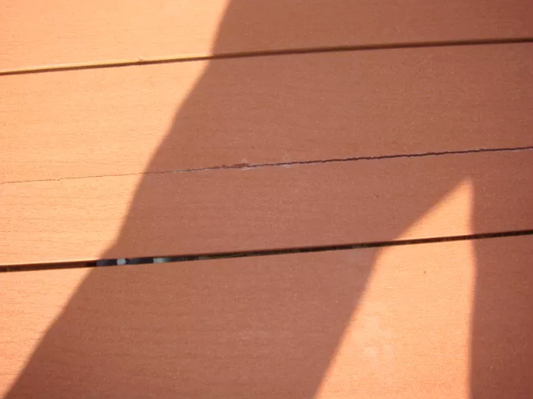
Not all composite decking is created equal. The co-extrusion technology gap between manufacturers is significant, and the consequences of specifying an underperforming product become apparent only after installation — often in the form of surface delamination, colour fade within two seasons, or premature structural degradation.
Production capacity and supply reliability
For commercial and large residential projects, supply chain stability is non-negotiable. BOHAI operates more than 50 production lines across our manufacturing facilities, enabling consistent batch quality and the production volumes required by large-scale distributors and contractors. Single-source manufacturing eliminates the quality variance that inevitably results when orders are spread across multiple sub-contractors.
Third-party certifications
Require ISO production certification, fire performance test reports relevant to your jurisdiction (EN13501 for Europe, NFPA for North America), and independent weathering test data covering at minimum 3,000 hours of accelerated UV exposure. Be sceptical of manufacturers who cannot produce these documents on request.
Customisation capability
The most defensible position in the composite decking market is the ability to produce custom colourways, dimensions, and surface textures at production volume pricing. BOHAI's engineering team works directly with architects, developers, and large distributors to produce bespoke specifications — a capability that distinguishes a genuine manufacturer from a trading company reselling standard profiles.
After-sale technical support
WPC composite installation, while genuinely simpler than timber decking, requires correct subframe specification, expansion gap allowances, and fastener selection. Manufacturers who provide detailed installation documentation, on-call technical support, and sample packs for specification projects significantly reduce contractor error rates — and the costly remediation that follows.
Looking Forward: The Materials Defining Outdoor Architecture
The trajectory is clear. As regulatory pressure on virgin timber intensifies, as the true lifecycle cost of high-maintenance natural materials becomes better understood, and as the aesthetic quality of engineered composites continues to close the gap with premium hardwoods, WPC composite materials are moving from a pragmatic substitute to an actively preferred specification choice.
At BOHAI, we have been at the forefront of this transition since the earliest iterations of wood-plastic composite technology. The products we manufacture today — second-generation co-extrusion WPC decking, composite cladding, composite fencing, engineered glulam, and thermal timber — represent the synthesis of two decades of materials science, manufacturing investment, and real-world performance data from projects across six continents.
Whether you are a distributor building an outdoor living product range, a contractor specifying materials for a mixed-use development, or a homeowner planning a garden transformation, the conversation about durable, sustainable, and beautiful outdoor spaces begins with understanding what modern composite materials can actually deliver.
Tags: