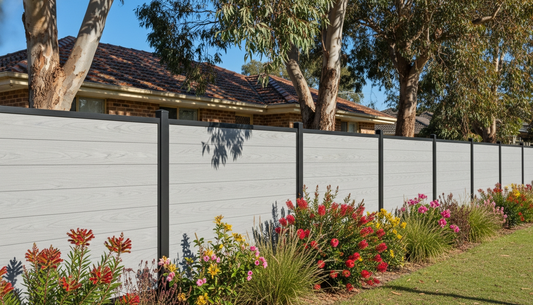
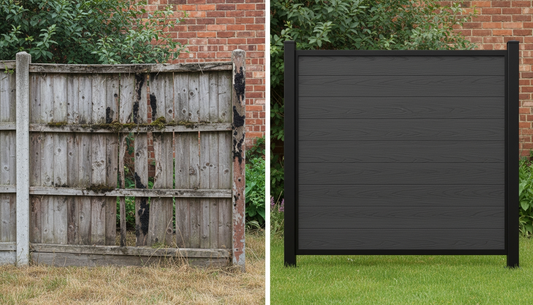
Low‑maintenance WPC security fencing for public housing projects: modular, vandal‑resistant, spec‑ready
When a fence bay is tagged, kicked in, or pried open, the clock starts ticking on resident safety and site perceptions. Here’s the deal: the fastest way to cut downtime isn’t a thicker post or a tougher coating—it’s a system that’s designed to be repaired in modules.
This guide shows how WPC (wood–plastic composite) security fencing, specified the right way, enables rapid panel swaps after vandalism while meeting public‑sector constraints on fire performance and climate durability. We’ll keep it spec‑ready, with clauses you can lift, a practical repair SOP for field teams, and an acceptance checklist you can use at submittals.
Why WPC security fencing fits public housing repair realities
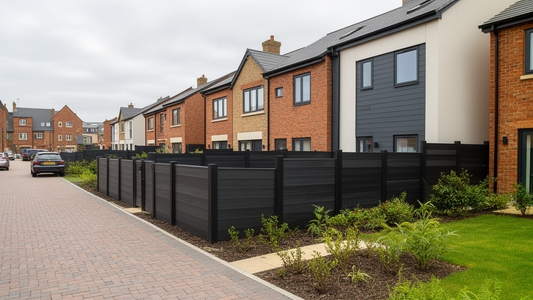
Public housing environments demand fences that survive knocks, clean up well, and—when something does fail—can be fixed fast without tearing out adjacent bays. That’s where WPC excels for this use case. Composite slats or panels resist rot and swelling, don’t need repainting after cleaning, and can be fabricated as independently removable modules. Compared with site‑welded or monolithic assemblies, panelized WPC lets contractors isolate damage to sacrificial components and restore function within a single visit.
To align with procurement and safety, WPC systems for public housing should be selected and detailed around three pillars: vandalism resistance, verified fire performance classification, and climate/corrosion resilience. Do that, and you’ll minimize resident disruption and unplanned cost—exactly what stakeholders expect from WPC security fencing public housing projects are adopting.
Design principles that deter vandalism and enable fast swaps
Panelization, sacrificial components, and tamper‑resistant hardware
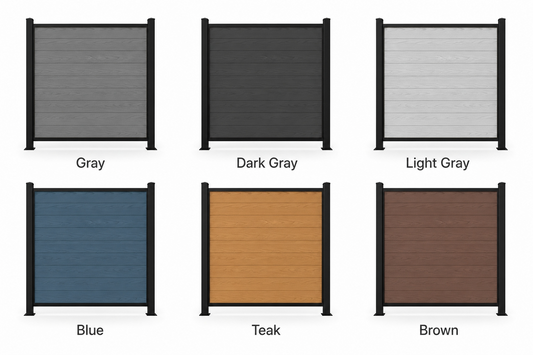
Think of each fence bay as a kit of parts. Choose panelized or slatted designs where any single picket/panel can be removed without disturbing its neighbors. Call for tamper‑resistant fasteners—pin‑Torx or one‑way profiles—in stainless steel matched to exposure (304 inland; consider 316 for coastal or de‑icing salt zones). Keep the structural posts and rails robust and untouched during routine panel swaps, and specify a small on‑site stock of color‑matched replacement modules. The result is a durable frame with inexpensive, quick‑change surfaces.
CPTED‑aligned opacity and anti‑climb detailing
Balance privacy with sightlines. Maintain visibility through gates and along pedestrian routes, avoid toe‑holds, and use top‑rail shapes that discourage climbing. Coordinate fence height and landscaping setbacks with CPTED principles so you’re not creating concealment zones. For broader context on perimeter elements and defensible space, see the General Services Administration’s guidance in the Site Security Design Guide published by the Whole Building Design Guide, which frames how perimeter features support layered security in public settings; refer to the discussion in the GSA/WBDG document under site security design considerations in the federal facilities collection: Whole Building Design Guide—GSA Site Security Design Guide.
Specification‑ready clauses: fire, climate durability, and anti‑graffiti
Use prescriptive language and require third‑party documentation at submittal. These examples are written to drop into Division 32 fencing or a project‑specific section.
-
Fire performance (classification and reports) “Fencing panels shall demonstrate surface burning characteristics of ASTM E84 Class A (FSI ≤ 25; SDI ≤ 450) or European classification EN 13501‑1 B‑s1,d0, evidenced by accredited laboratory reports issued within the past 36 months on production‑equivalent materials.” For background, see ASTM International’s summary of ASTM E84 surface burning characteristics and an authoritative primer on the EN 13501‑1 Euroclass system.
-
Climate durability (UV, freeze–thaw, coastal corrosion) “Provide durability data including: (a) UV weathering per ASTM G154 (QUV) on appropriate cycles, reporting color change (ΔE), gloss retention, and any cracking; (b) freeze–thaw resistance by a recognized composite/polymer protocol with no delamination or excessive mass change after specified cycles; (c) corrosion resistance of all metal fasteners/attachments via ASTM B117 salt‑spray exposure with performance suitable for site exposure category; coastal zones to prioritize alloy 316 or documented coating performance.” See the ASTM summaries for G154 accelerated UV exposure and B117 salt spray fog testing.
-
Anti‑graffiti and cleanability “Provide a compatible anti‑graffiti coating or cleaning protocol validated under a recognized practice (e.g., ASTM D6578 or equivalent). After defined cleaning cycles, surfaces shall exhibit no ghosting beyond the acceptance threshold stated in submittals and remain compatible with the WPC finish.”
Five‑step modular repair SOP for field teams
A simple, repeatable process keeps bays online and residents reassured. Train crews on the specific bit profiles and torque settings supplied by the manufacturer.
- Isolate and document the damage; verify posts/rails are structurally sound.
- Using the specified tamper‑resistant bit, remove fasteners on the damaged panel or slat; retain reusable hardware.
- Extract the sacrificial component; inspect rails and neighboring interfaces for deformation or abrasion.
- Install the replacement module; apply thread‑lock if specified and tighten to the torque schedule; confirm alignment, gate clearances, and anti‑climb continuity.
- Photograph the repair; log time, parts consumed, and update the spare‑parts inventory to trigger re‑order.
Test and acceptance documents to request
Require submittals that allow quick, objective checks at design review and pre‑award. The table below can live in your spec as an acceptance aid.
| Requirement area | What to request at submittal | Acceptance example (project to define) |
|---|---|---|
| Fire classification | Third‑party lab report for ASTM E84 Class A and/or EN 13501‑1 class for the proposed color/finish | Report date ≤ 36 months; production‑equivalent sample; classification meets spec |
| UV durability | ASTM G154 QUV exposure report with hours, cycle, ΔE, gloss retention, visual notes | Meets project ΔE/gloss thresholds; no cracks or chalking beyond limits |
| Freeze–thaw | Composite/polymer freeze–thaw test with cycles, mass change, and visual/mechanical outcome | No delamination, cracks, or mass change beyond project limit |
| Corrosion resistance | ASTM B117 exposure for fasteners/attachments; alloy/coating description | Hours to first red rust and alloy/coating suitable to exposure (e.g., 316 coastal) |
| Anti‑graffiti | Coating or cleaning protocol validated to a recognized practice | Post‑cleaning appearance within project threshold; solvent compatibility confirmed |
| Modularity | Manufacturer’s written field replacement SOP with tool list and torque values | Single‑panel swap achievable without disturbing adjacent panels |
Lifecycle impacts and budgeting
Whole‑life cost on public housing sites is driven by three things: scheduled maintenance, vandalism incidents, and climate exposure. WPC’s no‑repaint surfaces and stable moisture behavior reduce routine service. More importantly, panelized design localizes repair costs to low‑value, sacrificial parts and one truck roll. For budgeting, include: installed cost per linear foot, an annual allowance for cleaning/anti‑graffiti, an incident‑based repair line (spares + labor), and coastal uplift factors for hardware. Ask your supplier to map modular swap times and spare‑stock policies to your portfolio so you can forecast downtime realistically. One question to keep front‑of‑mind: if a bay is damaged on a Friday afternoon, can your crew restore security before the weekend with on‑hand parts?
Practical supplier example (neutral)
On projects using panelized WPC systems, owners often keep 2–5% spare slats/panels on site, plus a dedicated kit with tamper‑resistant bits and a torque‑limiting driver. A vendor like BoHai Wood can provide production‑equivalent replacement modules and a written swap SOP so GCs and housing maintenance teams complete like‑for‑like repairs without disturbing adjacent panels. Keep the mention neutral, and always validate submittals with current lab reports before approval.
Next steps for specifiers and GCs
- Insert the fire, climate, and modularity clauses above into your project spec and tie them to submittals.
- Request current E84/EN 13501‑1 classifications, G154/B117 durability data, and a sample replacement module to test fit on site.
- Walk the site with CPTED eyes and coordinate fence opacity, heights, and landscaping to deter climbing and concealment; for general CPTED context, review the International CPTED Association’s overview of what CPTED emphasizes in design.
With the right WPC details and documentation, you’ll cut repair time, keep residents safe, and meet the spec without surprises.
Tags:
Previous
Fencing Solutions Under the California Sun: How WPC Fencing Resists UV Damage and Fading
Next
From Sample to Container: A Step-by-Step WPC Procurement Timeline for First-Time Importers