Desert Wind and Sand Abrasion on Exterior Walls: Why Composite Cladding Is the Best Choice

1.0 Introduction
Desert and semi-arid regions often experience strong winds carrying fine sand, which continuously impacts exterior walls, causing scratches, coating damage, color fading, and accelerated aging. Choosing the right material and installation methods is critical for low-maintenance, long-lasting exterior walls. This article presents a real-world project evaluating exterior wall materials under sandstorm conditions, highlighting the advantages of composite cladding.
2.0 Project Overview

Objective: Evaluate common exterior wall materials—natural wood, aluminum, PVC, and composite cladding—for abrasion resistance, color retention, and maintenance cost in sandy, windy conditions, and provide recommendations for desert applications.
Location: Simulated sandstorm environment + Abu Dhabi residential site observation
Duration: Short-term abrasion testing (6 weeks) + long-term field observation (12 months)
Key Metrics (KPIs): Surface wear rate, color difference ΔE, maintenance frequency, lifecycle cost (LCC)
2.1 Methods and Testing
Experimental Methods
-
Sand Impact Test: Using a standard wind-sand test chamber to simulate different wind speeds and sand particle sizes.
-
Abrasion Cycle Testing: ASTM/ISO-compliant simulation of daily sandstorm wear, measuring mass loss and surface change.
-
Accelerated Aging: Combined UV, salt fog, and sand abrasion testing to evaluate coating and substrate durability.
-
On-site Sample Walls: Installed in desert environments, photographed and measured at 3, 6, and 12 months.
Image Position 1 (H3)
-
Purpose: Sandstorm test chamber in action
-
Image Keywords:
wind sand abrasion test chamber composite cladding
2.2 Results and Comparison (H2)
| Metric | Natural Wood | Aluminum | PVC | Composite Cladding |
|---|---|---|---|---|
| Front-face Scratch Depth | 0.7–1.0 mm | 0.4–0.8 mm | 0.8–1.2 mm | 0.1–0.25 mm |
| Color Difference ΔE | 4.5 | 3.8 | 6.8 | 1.9 |
| Maintenance Frequency | Once/year | Once/2 years | 3 times/year | 0 (regular washing only) |
| Expected Lifespan | 7–10 years | 10–12 years | 5–7 years | 15–20 years |
Image Position 2 (H3)
-
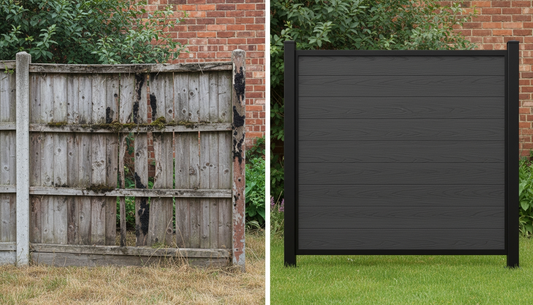
Purpose: Side-by-side comparison of materials after sandstorm
-
Image Keywords:
composite cladding vs pvc wood aluminum sandstorm damage
3.0 Real Project Case Study
Project Background
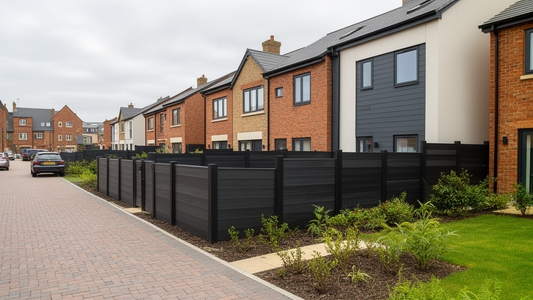
A residential development in Abu Dhabi experiences strong winds carrying sand approximately 110 days a year. In Phase 1, PVC cladding was installed, resulting in scratches, color fading, and chalking within 3 months. For Phases 2 and 3, the developer switched to composite cladding, supported by our materials and installation expertise.
Materials and Installation

-
Material: UV-coated composite cladding (abrasion-resistant)
-
Size: 219mm W × 26mm H × 3m L
-
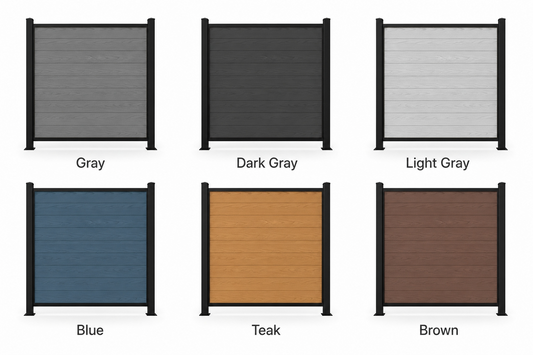
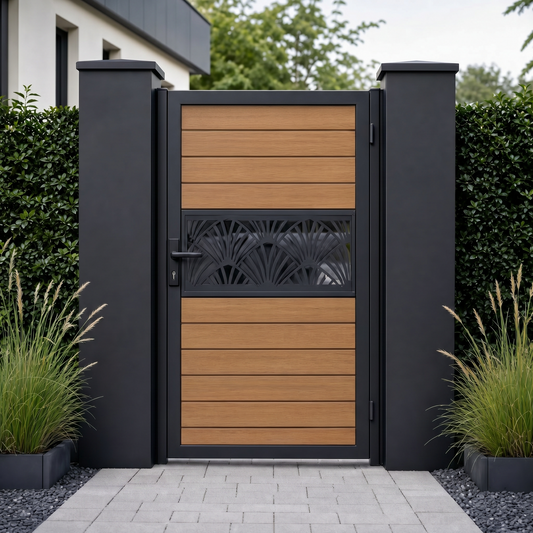
Colors: Desert Grey & Burnt Wood
-
Installation: Hidden-frame system + sandproof edge strips
-
Additional Design: 3mm sandproof sealing strips, high-density protective layer on windward side, modular panels for easy replacement
Case Data (12-Month Field Observation) (H3)
| Metric | PVC Cladding (Phase 1) | Composite Cladding (Phases 2–3) |
|---|---|---|
| Surface Scratch | 0.8–1.2 mm | 0.1–0.25 mm |
| Color Difference ΔE | 6.8 | 1.9 |
| Maintenance | 3 times/year | 0 |
| Complaints | 21% | <1% |
| Lifespan | 5–7 years | 15–20 years |
4.0 Why Choose Composite Cladding

-
High Abrasion Resistance: Resists sand particle impact
-
Low Maintenance: No frequent repainting or sealing required
-
Dimensional Stability: Resists cracking and warping
-
Aesthetically Versatile & Recyclable: Wood grain or multiple color options
4.1 Installation and Maintenance Tips
-
Slightly angled eaves reduce direct wind impact
-
Reinforce edges and joints to prevent sand infiltration
-
Use cladding with anti-scratch coatings
-
Modular, replaceable panels simplify local repairs
5.0 Conclusion
In desert and high sandstorm regions, composite cladding outperforms PVC, wood, and aluminum in durability, maintenance, and appearance retention. Lifespan can be doubled or tripled, with drastically lower maintenance costs.
Explore our WPC composite cladding panels for extreme climate applications.
Tags:
Previous
Case Study: Solving Brittleness and Warping of Composite Decking in Canada’s Extreme Cold
Next
Fencing Solutions Under the California Sun: How WPC Fencing Resists UV Damage and Fading